In today's fast-paced industrial world, businesses constantly seek innovative solutions to enhance efficiency. The rise of the Autonomous Forklift offers a transformative approach to material handling. These machines operate independently, leading to reduced labor costs and increased productivity. Moreover, autonomous forklifts minimize human errors, ensuring safer work environments.
Businesses are gradually adopting this technology, yet its effectiveness depends on implementation. While the upfront investment is significant, the long-term benefits often outweigh the costs. Periodic maintenance and updates are essential to keep these machines working optimally. Some companies may hesitate due to initial complexities, but the learning curve is manageable.
Embracing Autonomous Forklifts can significantly impact warehouse operations. The ability to work around the clock ensures that operations run smoothly. Ultimately, integrating this technology is not just about efficiency; it reflects a forward-thinking mindset that prioritizes innovation and safety in the workplace.
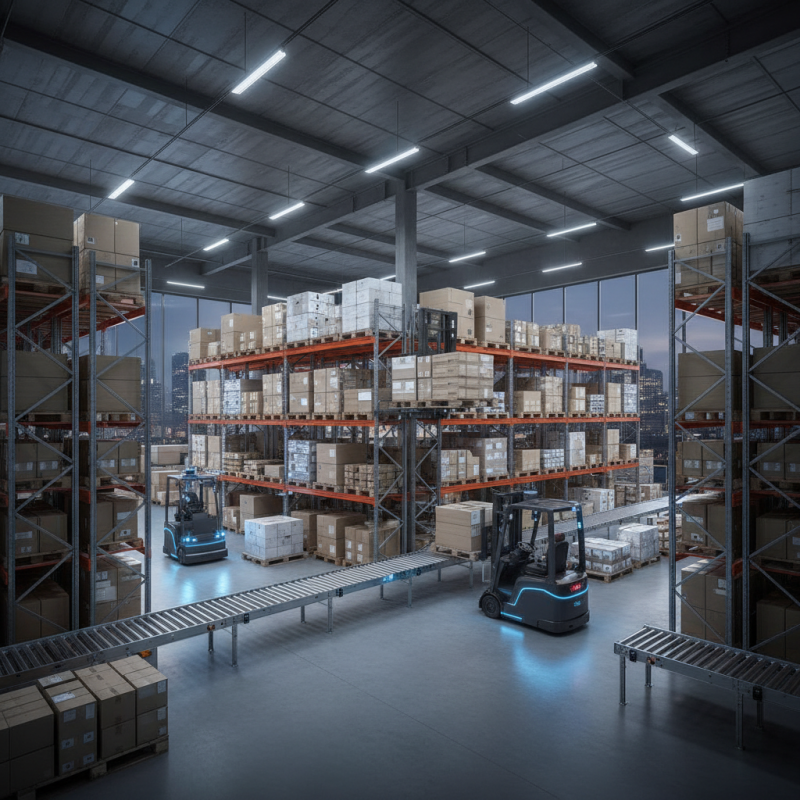
Autonomous forklifts are transforming warehouse operations by reducing human error and improving efficiency. According to a 2023 Logistics Insight report, companies adopting these systems saw a 25% drop in workplace accidents. This is largely due to precise navigation technologies and obstacle detection. The forklifts work continuously without breaks, increasing uptime and throughput. However, implementing autonomous vehicles can be costly upfront and requires skilled staff for maintenance and monitoring.
Data from the International Material Handling Federation indicates that warehouses using autonomous forklifts reduce operational costs by nearly 20%. These savings come from lower labor costs and fewer product damages due to better load handling. The vehicles use AI to optimize routes, cutting travel distances inside facilities. But, some challenges remain. Integration with older warehouse management systems can cause inefficiencies until fully adapted.
Despite some friction during initial deployment, autonomous forklifts streamline order fulfillment and inventory management. The technology enables real-time data collection, offering managers clearer visibility into warehouse flows. Still, the success depends on continuous staff training and system updates. These insights demonstrate why more businesses view autonomous forklifts as critical tools in modernizing their operations.
| Benefit | Description | Impact on Operations |
|---|---|---|
| Increased Efficiency | Autonomous forklifts can operate continuously without breaks, leading to a significant increase in productivity. | Reduction in cycle times and faster order fulfillment. |
| Cost Savings | Lower labor costs as fewer operators are needed, and reduced workplace injuries. | Budget allocation towards innovation rather than labor costs. |
| Improved Safety | Equipped with sensors and cameras, these machines can navigate safely around obstacles and personnel. | Reduction in workplace accidents and associated costs. |
| Data-Driven Operations | Autonomous forklifts collect data on performance metrics which can be analyzed for continuous improvement. | Enhanced operational strategies through quantifiable data. |
| Flexibility and Scalability | Easily adaptable to different tasks and scalable with business growth. | Ability to respond rapidly to changing operational demands. |
Autonomous forklifts are transforming the logistics landscape. A significant advantage is the cost savings they provide. By automating material handling, businesses can drastically reduce labor costs. Fewer workers are needed to operate these machines, which can lead to lower payroll expenses. This efficiency can free up resources for other critical areas.
Operational expenses also see a positive impact. Autonomous forklifts operate continuously, allowing for faster processing times. They minimize downtime associated with human error, leading to more streamlined operations. The maintenance costs for these machines can be predictable and lower compared to traditional forklifts. This predictability helps budget planning.
Moreover, these innovations come with a learning curve. Businesses must adapt to new technology and train existing staff. Some workers may feel uneasy with such changes, requiring careful management. Implementing this technology needs thoughtful consideration of the workforce dynamics. It's crucial to balance automation with the human element for optimal results.
Autonomous forklifts are transforming the workplace. One of the most compelling benefits is enhanced safety. Traditional forklifts often lead to accidents caused by human error. In contrast, autonomous technology minimizes these risks. These machines use advanced sensors and cameras to navigate, avoiding obstacles and ensuring safe operation. As a result, they reduce workplace injuries and costly damages.
Implementing autonomous forklifts can improve risk management strategies. With accurate data collection, businesses can better analyze safety patterns. This information helps in creating a safer work environment. However, it’s essential to properly train staff on these systems. A lack of understanding can lead to misuse, undermining safety measures.
Tips for maximizing safety with autonomous forklifts include regular maintenance checks and sensor calibrations. Ensure your facility's layout is optimized for safe machine navigation. Involve employees in the training process to create a culture of safety awareness. Constant evaluation of operations is crucial. This can uncover areas that still pose risks, even with advanced technology in place.
The use of autonomous forklifts is transforming warehouse management. These forklifts can significantly boost efficiency by automating repetitive tasks. This leads to faster product handling and reduced labor costs. According to a recent report from the Warehousing Association, businesses experience an average 30% increase in productivity after adopting autonomous solutions.
While the initial investment may seem daunting, the long-term savings are significant. A study conducted by the Logistics Management Organization found that automation can lower operational costs by up to 20%. This data illustrates a clear financial incentive for businesses to transition. Challenges remain, particularly regarding integration with existing systems and staff training. Addressing these issues early on can smoothen the transition process.
Tips: Assess your warehouse layout before implementation. This helps determine the most efficient paths for autonomous forklifts. Engage employees in the process to ensure a smoother adaptation phase. Regular maintenance and updates also enhance reliability, keeping operations running smoothly.
Autonomous forklifts are becoming essential for businesses seeking scalability and flexibility. These machines adapt easily to varying workloads, making them ideal for rapidly changing environments. According to a recent study by the Warehousing and Logistics Association, companies integrating autonomous solutions have experienced operational efficiency increases of up to 30%. This data underscores the potential impact on productivity.
One significant advantage is the ability to scale operations without substantial investment in labor. As demand fluctuates, autonomous forklifts can be redeployed quickly, responding to immediate needs. A report from the International Federation of Robotics highlights that 60% of logistics firms recognize automation's potential in handling peak periods effectively. However, challenges remain. Integration with existing systems and employee reskilling are common concerns. Finding the right balance between automation and human oversight is key.
Flexibility in performance is another critical benefit. Autonomous forklifts can adjust their routes in real-time, effectively using warehouse space. This dynamism is crucial in today’s fast-paced market. Yet, the initial cost can deter some businesses from adopting this technology. Careful analysis of long-term benefits versus upfront expenses is essential before taking the plunge.