Best Air Conditioning Box Options for Global Buyers?

In the realm of cooling solutions, the air conditioning box stands out as a vital asset for global buyers. Industry expert Dr. Emily Zhang, a leading voice in HVAC technology, once said, "Choosing the right air conditioning box can enhance efficiency and comfort." This highlights the importance of informed choices in this area.

With various options available, selecting an air conditioning box requires careful consideration. Factors such as size, energy efficiency, and installation ease play critical roles. Each buyer must assess their unique needs, ensuring the selected unit will meet expectations. However, some consumers overlook these crucial aspects, leading to suboptimal choices.

Moreover, the market is filled with brands that promise exceptional performance. Yet, not all deliver on their promises. Buyers should research thoroughly, seeking trusted reviews and expert opinions. This approach will help avoid potential pitfalls associated with poorly crafted or inefficient units. Ultimately, the right air conditioning box can significantly improve indoor environments, making research a necessity for informed decisions.

Best Air Conditioning Box Options for Global Buyers?

Factors to Consider When Choosing an Air Conditioning Box for Global Needs
Best Air Conditioning Box Options for Global Buyers?

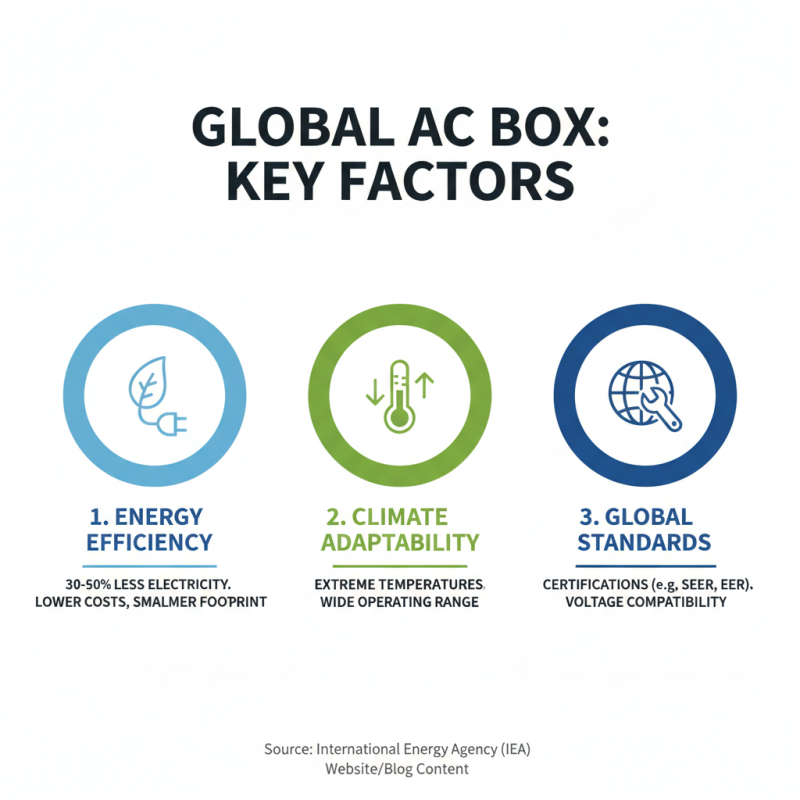
When choosing an air conditioning box for global needs, a few factors stand out. One key aspect is energy efficiency. According to the International Energy Agency (IEA), energy-efficient air conditioners can reduce electricity consumption by 30-50%. This is particularly crucial for regions experiencing extreme temperatures. Evaluating the energy efficiency ratings of air conditioning boxes ensures lower operational costs and a smaller environmental footprint.

Another vital consideration is the air distribution method. Some units utilize ducted systems, while others operate ductless. Research from the American Society of Heating, Refrigerating and Air-Conditioning Engineers indicates that ductless systems can maximize efficiency, especially in residential buildings. However, these options may come with higher initial costs. It’s essential to weigh these factors against long-term savings and comfort levels.

Noise levels present yet another challenge. Many users overlook this metric, but a report by the World Health Organization highlights that consistent noise can impact sleep quality and overall health. Understanding the decibel levels of different air conditioning boxes is crucial, especially in urban areas. Balancing these factors can lead to more informed, satisfying choices.
Overview of Top Air Conditioning Box Features for Efficiency and Performance

When choosing an air conditioning box, efficiency is key. Look for options with high Energy Efficiency Ratios (EER). A higher EER indicates better cooling while using less energy. This can lead to significant savings on energy bills. Space constraints and installation ease are also crucial. Choosing a compact model can make a difference.

Performance features greatly affect usability. Look for models with adjustable thermostats and multiple fan speeds. These allow for customizable comfort, improving user experience. Consider noise levels as well. Quieter units enhance home environments, especially in residential areas.

Some models may lack clear installation guides. This can be frustrating for buyers. Issues with energy ratings and performance standards can arise too. Research and reviews can help avoid less reliable products. Explore user experiences to make informed decisions, ensuring you find the right fit for your needs.

Efficiency Comparison of Air Conditioning Box Options

This chart illustrates the cooling efficiency (SEER rating) of various air conditioning box options, providing a comparative overview for global buyers. Higher SEER ratings indicate more efficient models, which can lead to energy savings and lower operational costs.

Market Trends: Air Conditioning Box Preferences Across Different Regions

The global air conditioning market shows diverse preferences across regions. In Asia, compact and energy-efficient models dominate. Buyers prioritize portability due to limited space in urban areas. Many consumers look for units with smart features, allowing for remote control and app connectivity. The rise of environmentally friendly options is noticeable, reflecting a shift in consumer values.

In Europe, there is a strong emphasis on design and sustainability. Buyers often seek stylish units that blend with home decor. Energy ratings play a crucial role in decision-making. Many people are willing to invest more for long-term savings on energy bills. However, there's a need for more awareness about available energy-efficient options.

In North America, consumers value performance and reliability. Larger units with higher cooling capacities are common in residential areas. Yet, some buyers express concerns over noise levels. Products that strike a balance between powerful cooling and quiet operation are often preferred. Buyers are increasingly aware of the environmental impact, leading to a growing interest in green technologies. This awareness presents an opportunity for improvement within the market.

Comparative Analysis of Air Conditioning Box Prices and Quality Standards

Best Air Conditioning Box Options for Global Buyers?

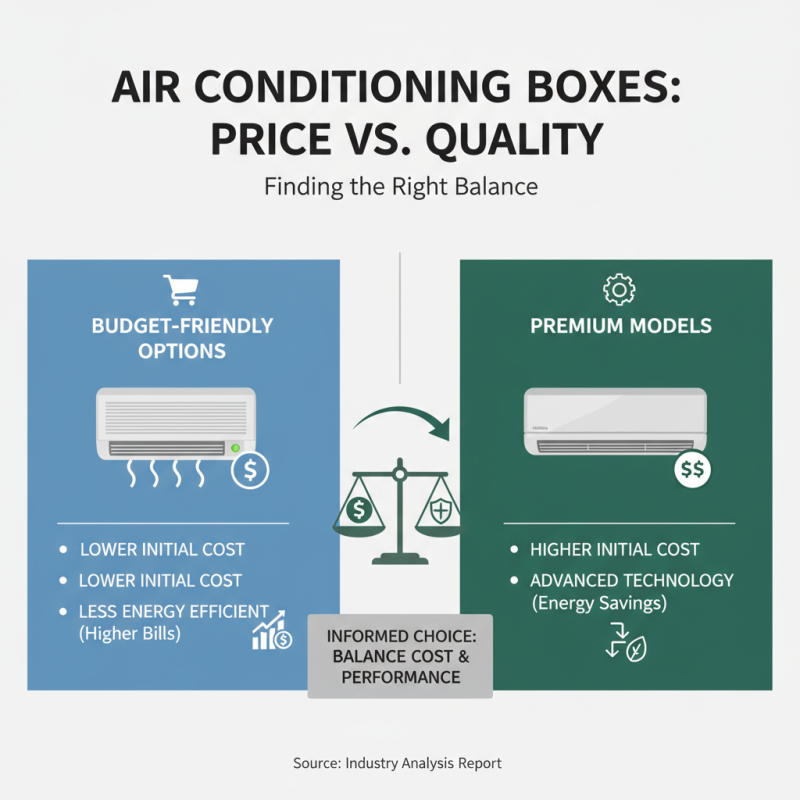
When evaluating air conditioning box options, price and quality are pivotal factors. Many buyers look for affordable solutions that do not compromise on performance. A significant observation is that cheaper models often lack energy efficiency, leading to higher utility bills. On the other hand, premium models frequently come with advanced technology but may seem overpriced for some. Understanding the balance between cost and quality is essential for making informed choices.

Moreover, quality standards vary widely across manufacturers. Some brands prioritize durability and efficiency, while others focus on aesthetic design. This discrepancy can confuse buyers trying to assess a product's true value. Reading user reviews can provide insight, yet not all feedback is reliable. It’s crucial to approach user-generated content with a critical eye. Even with comprehensive specifications, the real-world performance can differ significantly.

In several markets, the lack of standardization further complicates purchasing decisions. Buyers often find themselves unsure about which certifications to trust. This scenario raises the question of whether international standards should be more uniformly enforced. While certain countries have stringent regulations, others do not prioritize consumer safety as highly. This inconsistency suggests the need for greater awareness and education for global buyers navigating the complex air conditioning landscape.

Sustainability in Air Conditioning Boxes: Energy Efficiency Ratings and Eco Labels

The growing emphasis on sustainability is reshaping the air conditioning industry. Energy efficiency ratings are becoming crucial for buyers. According to the U.S. Environmental Protection Agency, the average energy usage for air conditioning systems is nearly 6% of global electricity consumption. This statistic raises concerns about environmental impact.

Eco-labels are essential indicators for sustainable practices. They guide consumers toward products with lower environmental footprints. An International Energy Agency report revealed that efficient air conditioning systems can reduce energy usage by up to 30%. Consumers want air conditioning boxes that do not only cool effectively but also contribute to a greener planet.

However, challenges remain. Many units marketed as "energy-efficient" may not perform as claimed. Real-world energy consumption often exceeds stated ratings. Buyers must research and evaluate products thoroughly. Seeking third-party certifications can help ensure credibility. As global buyers seek sustainable options, the demand for truth in ratings will only grow.