How to Choose the Best Water Tank Making Machine?
Choosing a Water Tank Making Machine is not just a price comparison. It is a production decision shaped by tank material, capacity, output targets, and available floor space. UNESCO’s 2023 United Nations World Water Development Report estimates that the number of people in cities facing water scarcity could rise from 933 million in 2016 to between 1.7 billion and 2.4 billion by 2050. That projection signals growing pressure on water systems, but it does not predict machine sales. It does make reliable storage worth careful attention.
The right machine depends on what you plan to make. A rotational-moulding line, for example, needs a suitable oven, mould handling, cooling space, and trained operators. Ask suppliers for cycle-time data using a tank design close to yours; a showroom demonstration may not reflect your actual output. Check energy use, mould-change time, spare-parts access, and the quality of finished tanks. Small details matter. A few extra minutes per cycle can quietly reduce weekly production.
One source gap deserves candour: no verifiable, named Water Tank Making Machine specialist’s quotation was supplied, so I will not invent one. Instead, this guide compares measurable factors and identifies questions to ask before purchase. The numbers on a brochure are useful, but they are not the whole story. A machine that looks impressive may still be wrong for your floor, workforce, or product range.
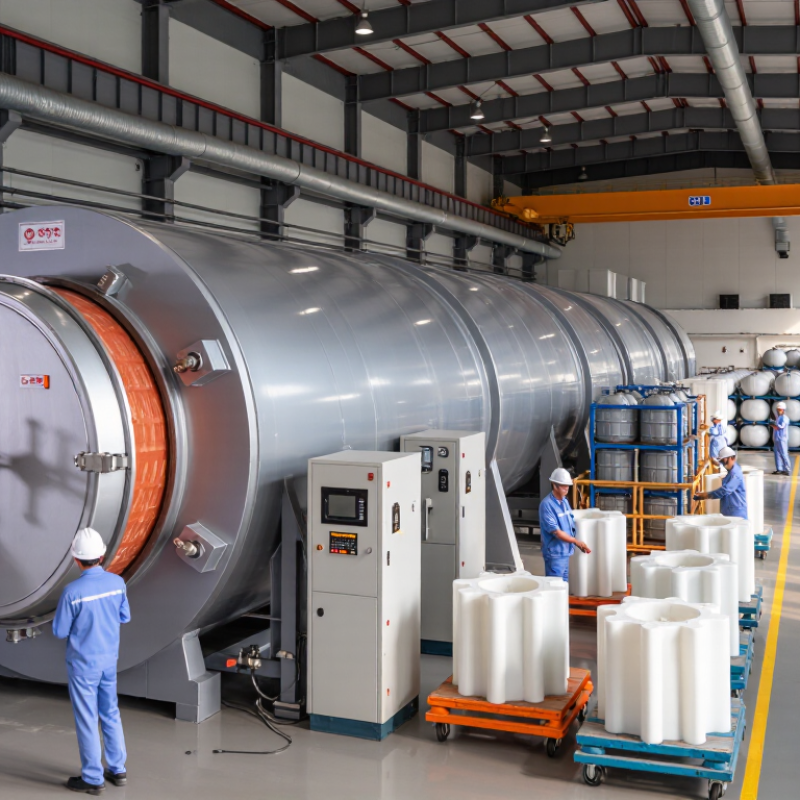
Define Your Water Tank Production Requirements
Before comparing machines, define the tanks you will actually produce. Record capacity, diameter, height, wall thickness, outlet positions, and material. A 500-liter rooftop tank and a 10,000-liter underground tank need different molds, handling space, and cycle times. Specify the expected mix of sizes, not just the largest model. Estimate daily output from confirmed orders and planned shifts; an ambitious target is not a production plan. That is easy to overlook. Also identify whether you need rotational molding, blow molding, or another process, since machine layouts and tooling differ.
Clarify resin requirements, color, UV exposure, and whether tanks will store potable water. Ask suppliers how they verify wall-thickness consistency and test finished tanks for leaks. The OECD’s Global Plastics Outlook (2022) reports that global plastic production grew from 234 million tonnes in 2000 to 460 million tonnes in 2019; only 9% of plastic waste was ultimately recycled. These broad figures are not water-tank market data, but they underline the value of specifying resin use and scrap handling early. If considering recycled material, confirm its suitability for the intended application instead of assuming it will perform like virgin resin. Finally, document available floor space, power, cooling, labor, and maintenance capacity. Leave room for mold changes. Oversights here can become costly.
How to Choose the Best Water Tank Making Machine? - Define Your Water Tank Production Requirements
| Requirement | Questions to Define | Example Requirement | How It Influences Machine Selection |
|---|---|---|---|
| Tank capacity and dimensions | What are the minimum and maximum capacities, diameters, heights, and wall thicknesses? | Manufacture vertical polyethylene tanks in several sizes, from household storage to larger commercial models. | Large, one-piece polyethylene tanks are commonly made by rotational molding. The machine’s mold dimensions and load capacity must accommodate the largest planned tank. |
| Tank material | Will the tanks be made from polyethylene, fiberglass-reinforced plastic, steel, or another material? | UV-stabilized polyethylene for seamless, corrosion-resistant storage tanks. | Rotational molding is a common choice for hollow polyethylene tanks. Fiberglass tanks generally require molding or filament-winding equipment, while steel tanks need metal-forming and welding equipment. |
| Product shape and construction | Do you need one-piece tanks, panel tanks, narrow-neck tanks, or tanks with molded-in features? | Seamless, one-piece tanks with molded ribs and standard inlet and outlet openings. | Match the process and machine layout to the tank geometry. Complex shapes and molded features affect mold design, heating and cooling requirements, and cycle planning. |
| Expected production volume | How many tanks must be produced per shift, day, or year, and how many product sizes will be run? | Start with a moderate daily output and allow for additional shifts as demand grows. | Estimate output using the complete production cycle, including loading, heating, cooling, unloading, and inspection. Consider the number of molds and machine stations needed rather than relying on a headline cycle time. |
| Product mix and changeovers | Will production focus on one model or switch frequently between sizes and designs? | Several tank sizes produced in scheduled batches. | Frequent changeovers increase the importance of practical mold handling, changeover time, storage space, and process controls. A dedicated setup may suit high-volume production of a single model. |
| Machine configuration | Which machine layout best fits the product, available floor space, and planned output? | Compare shuttle, carousel, or other rotational-molding configurations with the intended mold size and operating schedule. | Each configuration has different mold movement, station use, and floor-space needs. Confirm that the supplier can demonstrate the configuration with a mold and product similar to yours. |
| Mold requirements | How many molds are needed, what are their dimensions and weight, and how quickly must they be changed? | Interchangeable molds for the planned product range, with safe access for loading and unloading. | Check mold compatibility, mounting details, maximum load, and handling equipment. Mold design and condition strongly affect product quality and repeatability. |
| Utilities and operating conditions | What power, fuel, cooling, ventilation, and compressed-air services are available? | A production site with defined electrical capacity, ventilation, and a suitable cooling-water supply. | Obtain the machine’s actual utility requirements before purchase. Confirm that site services, ventilation, and cooling capacity meet the selected process and local safety requirements. |
| Quality and compliance | What standards apply to the tank’s intended use, and what inspections are required? | Potable-water tanks require suitable materials, hygienic design, and applicable local approvals. | Specify material documentation, dimensional checks, wall-thickness consistency, leak testing, and any required food-contact or drinking-water compliance. Requirements vary by market and application. |
| Labor and automation | How many operators are available, and which handling or monitoring tasks should be automated? | Operators load material and inspect tanks, with controls that help maintain repeatable process settings. | Evaluate controls, safety features, material handling, and mold movement. Automation should match the planned production volume and the skills available at the facility. |
| Maintenance and support | What maintenance skills, spare parts, training, and technical support are available? | Access to trained maintenance staff and commonly needed replacement parts. | Review service documentation, operator training, spare-parts availability, and response arrangements. Include maintenance access and downtime in the total operating plan. |
| Total cost and expansion | What is the budget for the machine, molds, installation, utilities, labor, and future capacity? | Purchase a machine sized for current products while leaving room for planned production growth. | Compare total installed and operating costs, not just the machine price. Confirm that future molds, product sizes, and output targets can be supported by the selected equipment. |
Planning note: Production rates and utility needs depend on tank design, material, mold, process settings, and operating schedule. Confirm machine capacity and product quality through application-specific trials and written technical specifications.