Essential Tips for Choosing the Right Lab Boiling Flask?

Choosing the right Lab Boiling Flask is crucial in any laboratory setting. As Dr. Emily Zhao, a renowned chemist at the National Institute of Standards and Technology, once said, "The right equipment can make or break your experiments." This underscores the importance of making informed decisions when selecting lab flasks.

When considering a Lab Boiling Flask, factors such as material, size, and design must be taken into account. Borosilicate glass is a popular choice due to its resistance to thermal shock. Ensure the flask has the right capacity for your specific experiments. Choosing a flask that’s too small may limit your work, while an oversized one can lead to waste.

In addition to these aspects, consider the practicalities. Does the flask fit within your existing lab setup? Is it compatible with other equipment? Reflecting on these questions can help avoid costly mistakes. A thoughtful approach will lead to better results in your experiments with a Lab Boiling Flask.
Essential Tips for Choosing the Right Lab Boiling Flask?

Understanding the Purpose of a Lab Boiling Flask

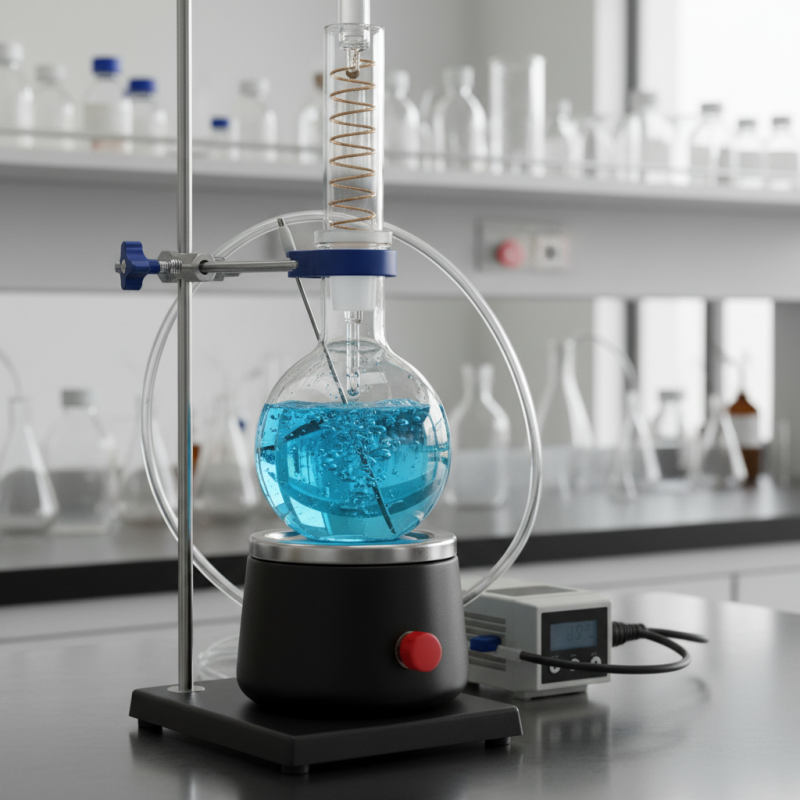
A lab boiling flask is essential for various experiments, especially when heating liquids. Understanding its purpose is crucial for any lab worker. This type of flask is designed to withstand high temperatures and has a wide body to allow for vigorous boiling and mixing. The flat bottom enables uniform heating, while the neck is often equipped for attachment to condensers.

When selecting a boiling flask, consider the volume needed for your experiments. Too small of a flask can cause overflow, while a very large one may not heat evenly. Material is also vital; borosilicate glass is a preferred choice due to its durability. Pay attention to the flask's neck length and width, as this impacts the ease of pouring. A short neck can be more stable but may limit certain connections.

Experimenting with different flasks can reveal unexpected challenges. A flask may not perform as expected under certain conditions. Reflect on your choice and its impact on your results. Ensuring that your technique aligns with the flask’s design is essential. Selecting the right boiling flask can significantly enhance the efficiency and reliability of your laboratory work.

Types of Lab Boiling Flasks and Their Applications

When selecting a lab boiling flask, understanding the different types available is crucial for effective experimentation. Common types include round-bottom flasks, flat-bottom flasks, and side-arm flasks. Round-bottom flasks excel in uniform heating, making them ideal for reactions requiring consistent temperature control. Flat-bottom flasks are versatile in heating applications, while side-arm flasks allow for easy gas or liquid addition during experiments.

In lab settings, the choice of flask can influence results. Consider the type of reactions performed and the substances involved. For example, using a round-bottom flask for vigorous boiling may enhance your experiment’s accuracy. Always check for compatibility with your materials to prevent unwanted reactions. When in doubt, experiment with various flasks to find the best fit.

Tips for choosing the right boiling flask include assessing your specific needs, such as volume and thermal resistance. Pay attention to the flask's material, often glass or borosilicate. Each has unique properties affecting your results. Test different flasks under similar conditions to find which works best. Remember, not all flasks perform equally. Continuous evaluation will improve your lab work significantly.

Key Features to Consider When Choosing a Boiling Flask

Choosing the right lab boiling flask requires careful consideration of several essential features. One of the most critical elements is the material. Glass flasks are common, providing excellent thermal resistance. However, they can be fragile. Borosilicate glass is often preferred for its strength. Plastic options are available too, though they typically have lower heat resistance.


Volume capacity is another important factor. Boiling flasks come in various sizes, from 100 ml to several liters. Selecting the proper size depends on your specific experiments. A flask that is too small may overflow, while a large flask might be cumbersome to handle.


Consider the neck shape and design, as well. A wide neck makes for easier pouring, while a narrow neck reduces evaporation. Ensure the flask has markings for easy measurement, too. Small details can make a big difference in usability. Reflecting on these factors can help avoid future frustrations. Choosing a boiling flask may seem straightforward, but the wrong choice can complicate operations.

Material Selection: Glass vs. Plastic Flasks

When choosing a lab boiling flask, material selection is crucial. Glass and plastic flasks each have their pros and cons. According to a report by the American Chemical Society, glass flasks are more chemically resistant. They handle high temperatures well, making them suitable for boiling and refluxing applications.

However, glass can be heavy and breakable. This raises safety concerns in busy lab settings. In contrast, plastic flasks are lighter and shatterproof. They are easy to deal with but may not withstand high temperatures or harsh chemicals. Some plastics can leach harmful substances when heated. Choosing the right material requires a balance of safety and practicality.

Industry data shows that around 60% of laboratory professionals prefer glass for volatile substances. Yet, 40% opt for plastic for ease of handling. This choice often depends on specific experiments and lab conditions. Real-world issues arise when materials interact in unexpected ways. Users may need to reassess their choices based on these experiences.

Essential Tips for Choosing the Right Lab Boiling Flask

Property Glass Flask Plastic Flask
Chemical Resistance High Moderate
Temperature Tolerance Up to 500°C Up to 100°C
Weight Heavier Lighter
Visibility Transparent Translucent
Cost Higher Lower
Durability Brittle Flexible

Safety Considerations When Using Boiling Flasks in the Lab

When working with boiling flasks in the lab, safety is paramount. According to a report by the National Institute for Occupational Safety and Health (NIOSH), nearly 30% of lab accidents are related to improper use of glassware. Boiling flasks can be especially hazardous if not handled correctly. Proper personal protective equipment (PPE) is essential. Always wear safety goggles, heat-resistant gloves, and a lab coat.

Ensure your workspace is well-ventilated. Fumes from boiling liquids can be toxic. Inadequate ventilation increases the risk of inhalation. Position your boiling flask securely on a heat source to avoid spills or accidents. It's crucial to select the right size and type of flask for your needs, as this can alleviate many safety concerns.

Consider these tips: check for cracks before use and never fill the flask more than two-thirds full. This reduces the chance of spills and overboiling. If you're using reactive substances, ensure you have proper containment protocols. Regularly review your lab's safety procedures as guidelines can change. A proactive approach minimizes risks significantly.