Wheel Cover Injection Molding sits at the meeting point of styling, durability, and high-volume automotive production. A wheel cover may look simple, yet its broad, curved face can reveal sink marks, flow lines, or uneven gloss. Suppliers must control resin selection, mold temperature, filling balance, and cooling—not just cycle time. Small process variations can become obvious on a finished wheel.
The market context is substantial, though broader than wheel covers alone. Grand View Research valued the global injection molded plastics market at USD 330.41 billion in 2023 and projected a 4.9% compound annual growth rate through 2030. That figure should not be mistaken for wheel-cover revenue. It does show why supplier capability matters across automotive plastics. Injection-molding author and consultant John Beaumont’s published work on runner and gate design offers a relevant technical principle: tool layout influences how consistently plastic fills a part. I have not found a verifiable, wheel-cover-specific quotation from Beaumont, so presenting one as his exact words would be misleading.
This Top 10 overview compares suppliers through practical criteria: tooling expertise, material options, production capacity, quality controls, and evidence of automotive experience. Buyers should also ask to inspect sample parts under real lighting. Gloss can deceive. A polished sample does not prove stable output across a full production run. Rankings have limits, too; public data rarely reveals every plant’s performance or customer history. Use this list as a starting point, then verify each supplier against your geometry, resin, volume, and validation needs.
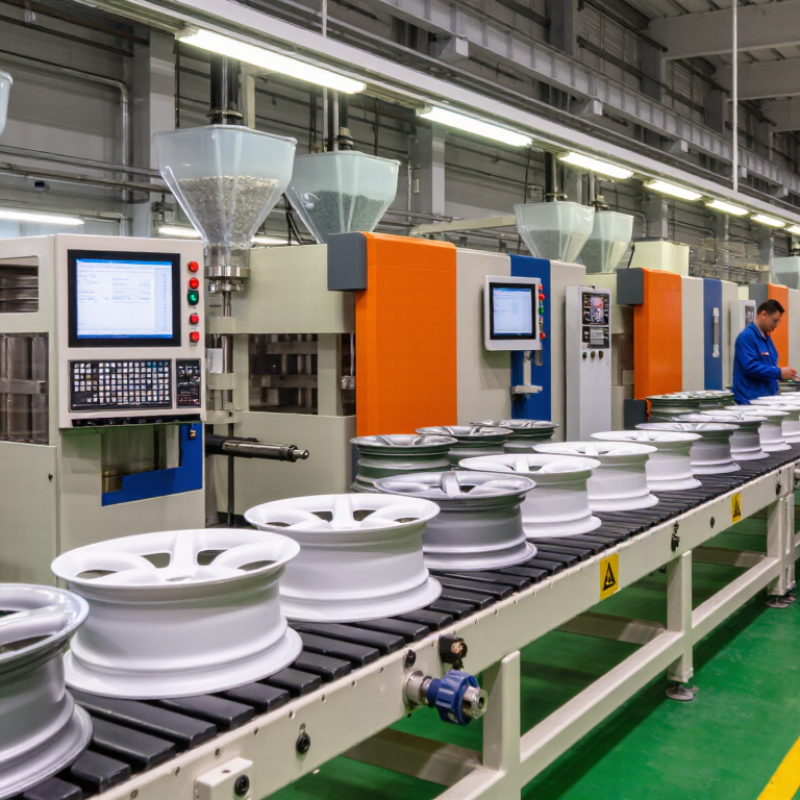
Injection-molded wheel covers are functional parts, not merely decorative discs. They conceal steel wheels, help shield them from road grime, and give vehicle makers a consistent finish across trims. Common designs use polypropylene blends or ABS, shaped with ribs, ventilation openings, and flexible retaining clips. Those details matter: a clip that releases during a tire change can frustrate both drivers and service technicians. Small details matter.
Applications range from passenger cars and light commercial vehicles to electric vehicles, where styling and airflow often receive extra attention. OICA recorded 93.5 million motor vehicles produced worldwide in 2023, indicating the scale of potential component demand (OICA, 2024 Production Statistics). The International Energy Agency reported nearly 14 million electric-car sales in 2023, about 18% of global car sales (Global EV Outlook 2024).
These figures describe vehicle markets, not wheel-cover sales, so they should not be treated as a direct demand forecast. Covers can support cleaner wheel styling, but aerodynamic gains depend on the full vehicle design and need testing.
A molded surface may look efficient; real-world performance is less certain.
Wheel cover injection molding begins with choosing a thermoplastic that suits the required impact resistance, finish, and operating conditions. Polypropylene is often considered for its balance of weight and toughness, though the right choice depends on the design. Resin pellets are heated, injected into a closed mold, and cooled until the part holds its shape. Mold details matter: gate position, venting, and cooling channels can affect surface quality and warpage. Small details matter. After ejection, technicians check fit, clips, dimensions, and visible defects.
Tips: Keep the mold clean and monitor melt temperature, injection pressure, and cooling time. Record settings for each production run. A small change can leave a noticeable sink mark or uneven gloss.
A wheel cover’s curved face and fastening features can cool at different rates, so consistent cooling helps maintain fit. Trial shots can reveal issues before full production, but one successful sample does not guarantee every part will match. Check parts across the run, not just at startup. If a clip feels too tight, revisit the design or process settings rather than assuming the material is at fault. Early estimates can be wrong; practical testing should guide adjustments.
A wheel-cover molding supplier should be assessed on repeatability, not just quoted price. OICA reported 93.5 million motor vehicles produced worldwide in 2023, a scale that makes stable output and traceable quality essential. Ask for capability data on key dimensions, scrap rates, cycle times, and tool maintenance. Then compare those figures with your forecast and inspection plan. A polished sample is not proof of consistent production.
Material control matters. Request resin certificates, drying records where applicable, and documented checks for color, impact resistance, and dimensional stability. The IEA’s Global EV Outlook 2024 reported nearly 14 million electric-car sales in 2023, about 18% of global car sales. That shift makes it sensible to discuss changing design, weight, and durability needs with suppliers, rather than treating every wheel cover as identical. Details matter.
Visit the molding floor if possible. Watch how parts are handled after ejection, and check whether operators can explain defect limits and corrective actions. Review mold ownership, spare-part planning, and capacity during peak demand. A supplier may promise a short lead time, but ask how it was measured. I would also question any proposal that leaves no time for production trials; that is easy to overlook, and costly to discover late.
Supplier-selection scorecard. The suggested weights are an evaluation framework, not a ranking of named companies. Adjust them to suit your program.
| No. | Selection criterion | Suggested weight | What to evaluate | Evidence to request |
|---|---|---|---|---|
| 1 | Automotive quality systems | 15% | Quality management, traceability, corrective action, and change control relevant to automotive production. | Current certificates, audit results, control plans, and sample nonconformance reports. |
| 2 | Wheel-cover molding experience | 13% | Experience with large, visible molded parts, including surface appearance, fit, retention features, and dimensional control. | Relevant project references, part samples, and examples of production issue resolution. |
| 3 | Press capacity and process fit | 12% | Clamping force, platen and tie-bar dimensions, shot capacity, and machine availability appropriate to the part and tool. | Machine list, tonnage range, press specifications, and a documented press-to-tool feasibility review. |
| 4 | Tooling design and maintenance | 12% | Mold design support, cooling and venting strategy, tool-life planning, spare parts, and preventive maintenance. | Mold-flow or design-review process, maintenance schedule, tool ownership terms, and repair-response plan. |
| 5 | Material and environmental performance | 10% | Ability to process specified polymers and meet applicable requirements for heat, impact, weathering, color, and recyclability. | Material datasheets, approved-source controls, test reports, and resin change-management records. |
| 6 | Dimensional and cosmetic inspection | 10% | Inspection capability for critical dimensions, warpage, fit, color consistency, and visible surface defects. | Measurement-system records, inspection standards, capability studies, and defect-limit samples. |
| 7 | Production capacity and delivery | 9% | Available machine time, shift coverage, capacity planning, lead times, and ability to manage demand changes. | Capacity model, recent delivery performance, production schedule, and contingency plan. |
| 8 | Secondary operations and assembly | 7% | In-house or controlled finishing, decoration, component assembly, packaging, and labeling where required by the specification. | Process flow, supplier controls for outsourced work, and inspection records for completed assemblies. |
| 9 | Geographic and supply-chain resilience | 6% | Freight routes, proximity to assembly locations, continuity planning, and exposure to logistics or material disruptions. | Shipping plan, business-continuity plan, critical-material sourcing information, and recovery targets. |
| 10 | Total cost and commercial transparency | 6% | Tooling, piece price, packaging, freight, inspection, maintenance, and change-related costs across the program life. | Itemized quotation, assumptions, payment terms, tool-cost breakdown, and documented price-change process. |
| Total suggested weighting | 100% | Score each candidate against the same requirements and supporting evidence. | ||
These ten supplier profiles represent different strengths in wheel cover injection molding. An integrated automotive molder may manage mold design, resin selection, molding, and assembly under one roof. A tooling-focused supplier can help refine spoke geometry and reduce sink marks before production begins. Some high-volume plants rely on automated presses and inline inspection to keep cycle times steady. Speed matters.
A materials-oriented supplier may offer color-matched polypropylene compounds and test samples for heat, impact, and weather exposure. Another profile is a regional specialist serving nearby vehicle manufacturers with shorter shipping routes and responsive engineering support. Export-focused suppliers often coordinate packaging and shipment planning, though delivery performance still needs verification. A surface-finishing specialist can provide textured or coated appearances, while a small-batch molder may suit prototypes and limited production runs. The trade-off is real.
The remaining profiles include a supplier with in-house mold maintenance, one with strong dimensional inspection, and one that supports collaborative product development. Useful checks include sample consistency, documented process controls, mold ownership terms, and the supplier’s experience with the required wheel size. Ask to review inspection records, not only a polished sample. A sample can look excellent while concealing variation between cavities. These profiles are starting points, not endorsements; capability should be confirmed against the actual design and production volume.
Wheel cover injection molding suppliers differ in more than machine size. Compare mold-design support, press capacity, resin options, and experience with large, thin parts. A capable supplier can discuss rib layout, clip strength, and warpage before steel is cut. Ask how prototypes are checked against the wheel’s fit and finish requirements. Small details matter.
Markets shape service needs. Suppliers serving distant customers may offer regional warehousing, export packing, or local technical support. Others focus on short lead times and frequent design changes. Ask for realistic tooling schedules, sample approval steps, and clear plans for color matching. A painted cover and a molded-in-color cover may need different process controls. Not always obvious.
Quality claims deserve practical questions. Request sample inspection records, material traceability, and evidence of dimensional checks across production runs. Visit the production floor when possible, or review a live process audit. A polished sample can hide inconsistent output; one good part proves little. Compare response times and corrective-action methods, too. There is no perfect supplier, and a detailed scorecard can still miss communication problems. Check references where possible, then confirm expectations in writing before ordering tooling.