Water Ripple Panels bring a moving, water-like texture to walls, ceilings, counters, and feature surfaces. Their rippled faces catch light at changing angles, making a lobby, restaurant, retail display, or elevator interior feel more dimensional. Designers choose them for visual impact, but also to create a focal point without adding many decorative objects. Light moves. The room changes.
Applications depend on the panel’s material, finish, and installation system. Stainless steel versions often suit high-traffic interiors, while other finishes may be selected for lighter-duty decorative settings. A sample viewed under showroom lighting can look different from one installed beside a window. That small detail matters. Reflective surfaces can also show fingerprints, seams, and uneven lighting more clearly than expected.
The wider building sector provides useful context, though it does not measure panel demand directly. The 2023 Global Status Report for Buildings and Construction, published by the UN Environment Programme and GlobalABC, reported that buildings accounted for 34% of global energy demand and 37% of energy- and process-related CO₂ emissions in 2022. That makes material selection and building performance important considerations, not reasons to assume one panel is automatically sustainable. Architect Louis Kahn wrote, “Architecture is the thoughtful making of space.” His words help explain why surface and light matter here, even though he was not speaking specifically about Water Ripple Panels. This guide explores where these panels work, what they contribute, and where their reflective effect may be too much.
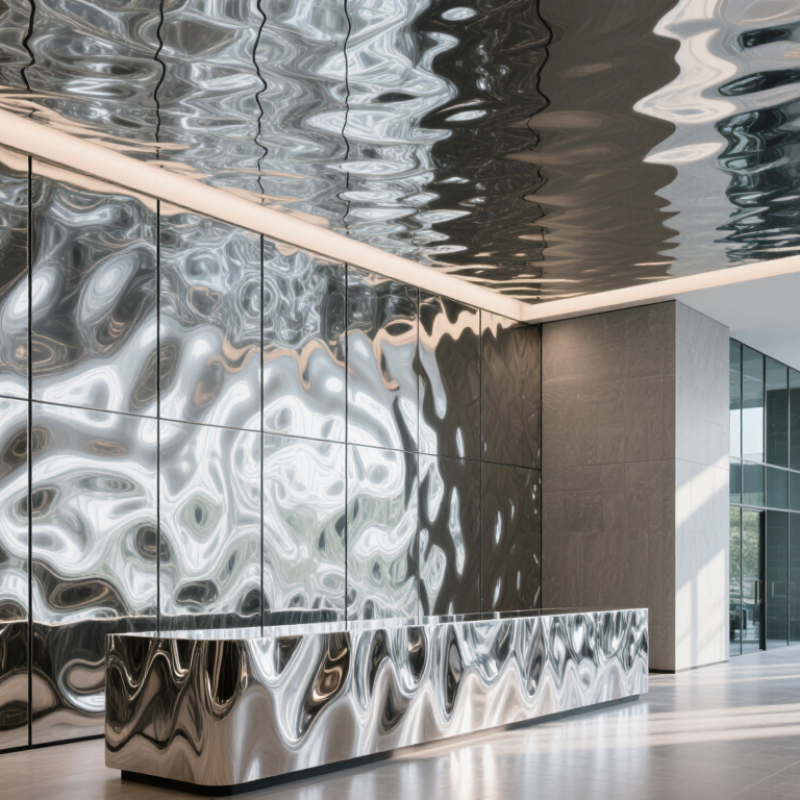
Water ripple panels are decorative sheets with a raised, wave-like surface. Their ridges bend and scatter light, creating shifting highlights rather than a perfectly clear view. The effect changes with the light source, viewing angle, and distance from the panel. That is the point. A nearby lamp may draw bright lines across the texture, while soft daylight can make the same surface appear quieter.
Designers use these panels for room dividers, cabinet inserts, wall features, and light-diffusing screens. They can add privacy without making a space feel closed off. The material matters: glass, acrylic, and other panel types differ in weight, clarity, and installation needs. Check the product specifications before choosing a fixing method, especially for large or overhead panels. Small shifts matter. A ripple pattern can look striking in a sample, yet feel busy across a full wall. That is worth reconsidering before committing.
Tips: View a sample under the lighting planned for the room, and from several distances. Keep the surrounding finishes simple if the surface is strongly textured. Clean with a soft cloth and a compatible cleaner; abrasive pads may dull or scratch some materials.
Water ripple panels use a textured surface to bend light into shifting bands and soft reflections. Their pattern can make a plain wall feel more dimensional without adding bulky objects. Near a window, daylight may travel across the panel as the sun moves. At night, a small wall light can create a more focused shimmer. The effect depends on the panel’s texture, its angle, and the light source. Small shifts matter.
In a narrow hallway, a ripple panel can add visual depth and draw attention along the wall. In a living room, it can act as a reflective backdrop, especially beside a reading nook or dining area. The reflected light may brighten a dim corner, but it will not replace proper room lighting. A practical detail: view a sample in the actual space before choosing a large panel. Glare and reflections can feel stronger than expected, and the result may look busy under direct sunlight. That is easy to overlook. A restrained placement often lets the moving light remain noticeable without making the whole room feel restless.
Water ripple panels bring a shifting, water-like texture to residential walls, ceilings, and feature areas. On a living-room wall, they can catch window light and soften a large, flat surface. In a hallway, a narrow panel can add depth without taking up floor space. On ceilings, use them sparingly: a low ceiling or busy lighting plan can make the pattern feel crowded. Check sample panels in the actual room; their reflections change with daylight and viewing angle.
For a feature wall behind a dining table or bed, keep nearby finishes calm. Matte paint, simple furniture, and restrained lighting help the rippled surface stand out. Ceiling installations need particular care around recessed lights, vents, and access points. Follow the panel maker’s fixing instructions, and confirm the substrate can support the chosen system. Decorative panels should not be assumed to provide sound insulation or moisture protection.
The National Association of Realtors’ 2022 Remodeling Impact Report found that 84% of surveyed homeowners had a greater desire to be home after remodeling. That is broad remodeling data, not evidence that ripple panels cause the same response. Still, it reflects why visual comfort matters at home. One drawback: textured surfaces can collect dust, and strong reflections may feel restless in a small room. Test a sample first.
What Are Water Ripple Panels Used For?
Water ripple panels bring a shifting, liquid-like texture to commercial interiors. Their raised or reflective surfaces catch light differently as people move through a space. The effect can add depth without relying on bold colors or busy patterns. Subtle, but useful.
In retail, panels can frame a product display, checkout area, or fitting-room entrance. A softly rippled backdrop may draw attention to merchandise while keeping the surrounding walls calm. Store teams should test samples under the actual lighting: strong spotlights can create glare, while dim corners may hide the texture. Not everywhere.
Hotels and restaurants often use water ripple panels in reception areas, dining spaces, and feature walls. They can introduce visual movement beside smooth stone, timber, or fabric finishes. In a compact lobby, a panel behind the desk can help define the welcome area without adding furniture. Yet a dramatic finish can compete with artwork or signage, so scale matters.
In offices, these panels can distinguish a reception zone, meeting-room wall, or shared lounge. They offer a visual focal point, but should not be assumed to improve sound control; performance depends on the product’s construction and installation. Check cleaning requirements, edge details, and fire documentation before specifying panels for busy interiors. A small mock-up can reveal problems that a polished rendering misses.
Common applications in retail, hospitality, and office interiors
Water ripple panels are commonly used as decorative finishes on feature walls, reception areas, counters, and partitions. Ratings are a qualitative design guide on a 1–5 scale, not measured performance or market data. Suitability depends on the panel material, installation, and project requirements.
Water ripple panels add a raised, flowing texture to feature walls, reception areas, ceilings, or display niches. Their changing highlights can make a plain room feel more layered. Light changes everything. A panel that looks subtle in a shop may appear much stronger beside a bright window. Request a sample, then view it under the room’s actual lighting before choosing a pattern, finish, and panel size.
Match the panel material to its setting. In kitchens, bathrooms, or other damp spaces, confirm that the product is specifically rated for moisture exposure; a ripple effect alone does not mean water resistance. Check the recommended substrate, fixing method, and cleaning limits before purchase. Installation depends on the panel. Prepare a flat, clean surface, measure carefully, and follow the supplied fitting instructions. Small test first. Dry-fit the layout to check how seams and repeating patterns will look. Wear suitable eye protection when cutting, and avoid forcing a panel that does not sit flush.
After fitting, dust the surface with a soft cloth or use a gentle vacuum attachment. Keep it gentle. Avoid abrasive pads and unapproved solvents, which can dull or scratch some finishes. Check edges and joints occasionally, especially in humid rooms. A small sample can still mislead: full panels may reflect light differently, so review the finished area from several angles before deciding the layout is right.
| Setting | Typical Use | Choosing a Panel | Installation Considerations | Maintenance | Practical Check |
|---|---|---|---|---|---|
| Living rooms and feature walls | Create a reflective focal point and add visual texture behind seating, a fireplace surround, or a display area. | Choose the ripple depth, panel size, reflectivity, and finish to suit the room’s lighting. Stainless steel and other reflective finishes can show fingerprints and reflected clutter. | Use a flat, stable substrate and the fixing method specified for the panel’s material and weight. Plan seams and edges before installation. | Dust with a soft cloth. Clean with a mild, finish-compatible solution; avoid abrasive pads that can scratch the surface. | Review the panel sample in the room’s actual daylight and artificial lighting before ordering. |
| Retail and display areas | Draw attention to product walls, counters, display niches, or branded environments without relying on printed graphics. | Consider glare, reflections, viewing angles, cleaning frequency, and resistance to everyday contact. Select a finish appropriate to the expected traffic. | Allow access to concealed wiring or services where required. Keep edges and joints aligned with the display layout. | Use a soft, non-abrasive cloth and a cleaner approved for the specific finish. Remove smudges promptly using the panel supplier’s guidance. | Check that lighting does not create distracting reflections for customers or staff. |
| Hotels, restaurants, and reception spaces | Add a decorative surface to lobbies, reception desks, dining areas, or other interior feature zones. | Balance appearance with cleaning demands. For frequently touched areas, compare the durability and repair options of available materials and finishes. | Coordinate panel joints, corner details, and access requirements with adjacent finishes. Confirm the substrate and fixings can support the installed assembly. | Follow a regular dusting and spot-cleaning routine. Avoid harsh chemicals unless the panel’s care instructions specifically allow them. | For public buildings, verify applicable fire, building, and accessibility requirements for the complete installation. |
| Bathrooms and other humid interiors | Provide a decorative accent outside direct spray zones or as part of a system specifically designed for the location. | Check the panel material, backing, edge treatment, and finish for suitability in humid conditions. A decorative panel is not automatically waterproof. | Use compatible fixings and follow the specified sealing and ventilation details. Wet-area waterproofing must be designed independently of the decorative finish. | Wipe away moisture and residue as appropriate. Avoid leaving cleaners or water deposits on the surface; use only finish-compatible products. | Confirm whether the product is approved for the intended exposure, especially near showers, baths, or sinks. |
| Ceilings and overhead features | Create a reflective ceiling accent or a feature above an entry, lobby, or display area. | Consider panel weight, size, reflectivity, viewing angle, and the effect of lighting. Obtain product-specific mass and fixing information. | Use a support system designed for overhead installation and the building structure. Do not rely on adhesive alone unless the panel instructions expressly permit it. | Plan safe access for inspection and cleaning. Follow site procedures for working at height and avoid bending or stressing the panels. | Have the fixing arrangement checked against the panel specification and applicable local requirements. |
| Elevators and narrow corridors | Add visual depth to interior doors, wall sections, or feature panels in compact circulation spaces. | Assess glare, reflection distortion, scratch visibility, and how the finish looks under close viewing. Choose dimensions that limit awkward seams. | Coordinate with door, wall, and hardware systems. Keep required clearances, access panels, and service openings unobstructed. | Clean gently and regularly, particularly on surfaces exposed to hand contact. Use a soft cloth to reduce the risk of fine scratches. | Check local fire and building requirements and confirm that the panel does not interfere with door operation or safety features. |
General note: “Water ripple” describes a textured visual effect; it does not mean a panel is suitable for immersion or direct water exposure. Material, fire performance, fixing method, cleaning products, and wet-area suitability vary by product, so confirm them with the panel documentation and local requirements.