How to Choose Domestic Air Conditioning Systems?
Choosing a domestic air conditioning system is not simply a matter of buying the largest unit available. It involves comfort, running costs, indoor air quality, noise, installation, and future maintenance. A quiet bedroom unit may need different features from a powerful system serving an open-plan living area. The details matter.
Amory Lovins, an energy-efficiency expert, observed, “The cheapest energy is the energy you don’t use.” This principle remains highly relevant to domestic air conditioning. A well-insulated room, shaded window, and correctly sized system can reduce electricity demand before the compressor even starts. Bigger is not always better. In fact, an oversized unit may cool the room quickly but remove less humidity, leaving the space cold and clammy.
This guide examines the practical choices homeowners face. It considers split systems, multi-split arrangements, ducted air conditioning, inverter technology, seasonal efficiency ratings, and smart controls. It also explains how room orientation, ceiling height, insulation, and occupancy affect capacity calculations. A kitchen with a south-facing window and frequent cooking needs different planning from a shaded study.
Professional advice is valuable, but it should be questioned respectfully. Ask whether the installer measured the rooms or relied on guesswork. Request clear information about noise, filters, refrigerant servicing, warranty terms, and expected energy use. Some recommendations may sound impressive yet offer little benefit in your home.
There is no perfect system. Trade-offs exist. The right domestic air conditioning solution should deliver steady comfort, sensible efficiency, and dependable support without exceeding the property’s actual needs.
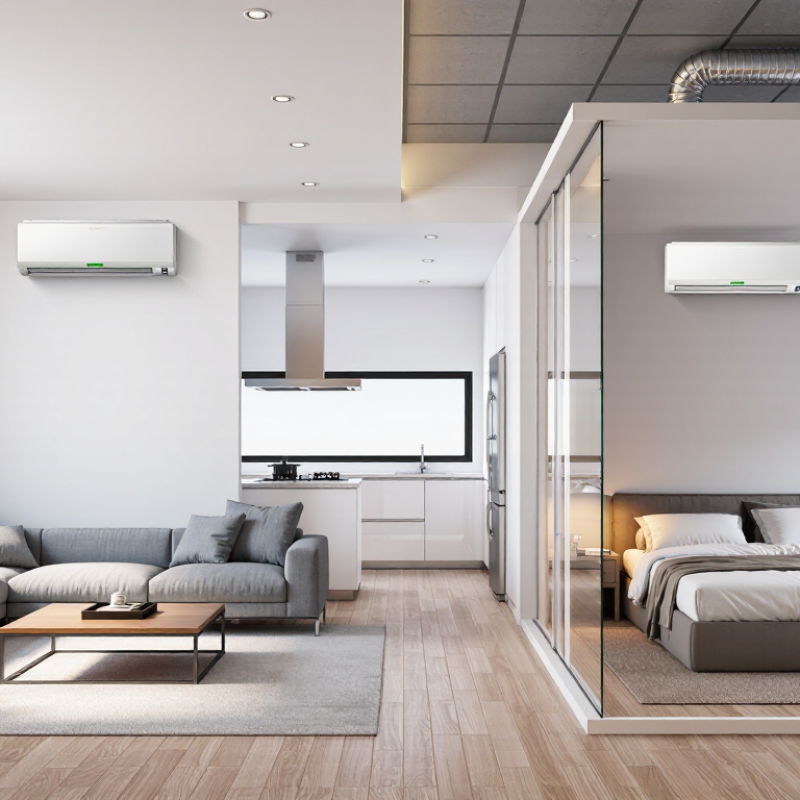
Define Your Home’s Cooling Needs and Indoor Comfort Goals
How to Choose Domestic Air Conditioning Systems?
Define Your Home’s Cooling Needs and Indoor Comfort Goals
Start with the rooms that actually need cooling. Note their size, window direction, insulation, ceiling height, and daily occupancy. A sunny bedroom may need different capacity from a shaded study. Cooking, computers, and frequent door opening also add heat.
Your comfort goal matters as much as room size. Do you need quiet sleep, fast cooling, stable humidity, or airflow across several rooms? The U.S. Department of Energy reports that heating and cooling represent about 48% of household energy use. An oversized system may cool quickly, but it can cycle too often and remove less moisture. That can leave the room cold, damp, and uncomfortable. Bigger is not automatically better. This is not a perfect formula.
The International Energy Agency states that space-cooling demand has more than tripled since 1990. This makes efficiency important, but real comfort should remain measurable. Track indoor temperature, humidity, noise, and electricity use for several days. The ideal setting may differ between a sleeping area and a living room. Your household routine can also change seasonally.
Tips: List your warmest rooms first. Set a realistic temperature target. Consider humidity control in wet climates. Ask a qualified professional for a room-by-room load calculation, rather than relying only on floor area. Review the calculation carefully; assumptions about windows and insulation are sometimes imperfect.
Compare Main Types of Domestic Air Conditioning Systems
Choosing a domestic air conditioning system starts with comparing how each type fits your rooms, budget, and daily habits. Split systems cool one main room efficiently and usually run quietly. Multi-split systems connect several indoor units to one outdoor unit, reducing exterior clutter. However, shared outdoor capacity can limit performance when every room demands maximum cooling.
Portable and window units suit renters or occasional use. They need less installation, but portable models may be louder and less efficient. Their exhaust hose must seal tightly around the window. Ducted systems provide discreet, whole-home cooling, yet installation can disturb ceilings and increase running costs. A professional heat-load calculation matters more than a simple floor-area estimate. South-facing glass, roof insulation, occupancy, and cooking heat can change the result.
The International Energy Agency’s The Future of Cooling reports that space cooling uses nearly 10% of global electricity. It also projects cooling energy demand could more than triple by 2050 without stronger efficiency measures. The U.S. Department of Energy recommends matching equipment capacity to calculated load, because oversized units cycle poorly and remove less humidity. That detail is often overlooked.
Look for high seasonal efficiency, washable filters, accessible drainage, and a qualified installer. No system wins every room. A compact split may outperform a large ducted system in a small, well-zoned home, but noise and maintenance still need checking. My practical reservation is simple: published efficiency rarely reflects an open door, blocked filter, or poorly sealed window.
Assess Room Size, Layout, and Installation Requirements
How to Choose Domestic Air Conditioning Systems?
Assess Room Size, Layout, and Installation Requirements
Room size is the starting point, but it is not the whole calculation. Measure the floor area, ceiling height, window size, and daily sunlight. A south-facing room with large glass may need more cooling than a shaded room of equal size. Count regular occupants and heat-producing appliances, such as ovens, computers, and televisions. A quick estimate can mislead.
Room layout also affects air movement. An open-plan space may need wider airflow coverage or more than one indoor unit. Long corridors, partial walls, and low beams can create warm pockets. Check whether cooled air can reach seating areas without blowing directly onto beds or desks. Comfort matters as much as capacity.
Installation conditions deserve an early inspection. Confirm suitable wall strength, drainage access, electrical capacity, and outdoor-unit clearance. The connecting pipe should follow a practical route, with limited bends and protected entry points. Ask a qualified technician to assess these details before purchase. A larger system is not automatically better. It may cycle frequently, waste energy, and control humidity poorly. I have seen layout assumptions fail when furniture changed after installation. Leave service access around filters and outdoor components. That small space is easy to forget.
How to Choose Domestic Air Conditioning Systems?
Assess Room Size, Layout, and Installation Requirements
Room Size
A preliminary residential estimate is about 100–150 watts of cooling capacity per square metre. The chart uses a midpoint of 125 W/m².
Layout and Heat Gain
Add capacity for strong solar exposure, large windows, high ceilings, frequent occupancy, kitchens, or open-plan areas.
Installation Requirements
Check indoor-unit airflow, outdoor-unit ventilation, condensate drainage, electrical supply, pipe length, and service access before installation.
This chart is a planning guide, not a final heat-load calculation. A qualified installer should verify the selection using local climate conditions, building construction, room orientation, insulation, and the manufacturer’s certified performance data.
Evaluate Energy Efficiency, Features, and Long-Term Costs
How to Choose Domestic Air Conditioning Systems?
Evaluate Energy Efficiency, Features, and Long-Term Costs
An efficient air conditioner should match your room size and local climate. An oversized unit may cool quickly but cycle too often. That wastes energy and increases indoor humidity. Check seasonal efficiency ratings, not only the purchase price. Higher ratings often reduce electricity use during long summers. Ask an installer to calculate the cooling load. Guessing from floor area is convenient, but it can be wrong.
Features should support daily comfort. Variable-speed compressors usually provide steadier temperatures and quieter operation. Zoning can prevent cooling empty rooms. A programmable controller may reduce nighttime consumption. Look for washable filters, clear maintenance access, and useful fault alerts. Fancy controls are not always valuable. I once focused too much on app functions and overlooked filter replacement costs. That was a poor comparison.
Long-term cost includes installation, electricity, cleaning, repairs, and eventual replacement. Request a written estimate with labor and future servicing listed separately. Confirm the system uses approved refrigerants and meets local efficiency requirements. Reliable installation matters as much as the equipment itself. Poor insulation, leaking ducts, or incorrect airflow can erase efficiency gains. Leave space around the outdoor unit. Keep leaves and dust away. A professional inspection after the first cooling season can reveal unusual noise, weak airflow, or rising power use. Small problems become expensive surprisingly fast.
Select a Suitable System and Plan for Ongoing Maintenance
How to Choose Domestic Air Conditioning Systems?
Selecting a domestic air conditioning system is only the beginning. Ongoing maintenance should influence your choice from day one. Look for accessible filters, clear service panels, and reliable local technicians. A system that is difficult to inspect may become expensive over time.
In my experience, neglected airflow causes many avoidable problems. Dusty filters can reduce cooling and increase energy use. Clean or replace them according to the operating environment, especially in homes with pets or nearby construction. Inspect outdoor coils each season and remove leaves without bending the fins. Keep the condensate drain clear. A blocked drain can leave water around indoor equipment.
Small details matter.
Tips: Record filter changes, service visits, and unusual sounds in a simple maintenance log. Check for weak airflow, uneven room temperatures, or unexpected moisture. These signs deserve attention before a minor fault becomes a major repair. Arrange professional inspections at suitable intervals, particularly before heavy summer use. Only qualified technicians should handle refrigerant or electrical components.
Do not choose equipment based only on purchase price. Ask about cleaning access, replacement parts, warranty conditions, and expected servicing costs. I once underestimated the value of easy filter access; the inconvenience made regular cleaning less consistent. That was a poor assumption. A quieter, efficient system is useful, but dependable maintenance support may matter more in the long term.