China’s air systems market spans industrial compressors, air treatment, ventilation, and HVAC equipment. The phrase covers very different products. A compressor supplying a factory line has different demands from an air-handling unit serving an office tower. Comparing manufacturers without separating these applications can produce a misleading shortlist.
A useful expert lens comes from Dr. William P. Bahnfleth, an indoor-air-quality researcher and ASHRAE Fellow. Paraphrasing the principle reflected in his work: “Judge air systems by measured performance, not promises.” That distinction matters when brochures highlight efficiency but omit operating conditions. Buyers should examine rated airflow, pressure, energy use, filtration, noise, controls, and service coverage. Ask for test conditions, not just headline figures. Small details count.
This guide examines prominent Chinese manufacturers through those practical questions. It considers product range, engineering capability, quality documentation, export experience, and the availability of parts and support. A stainless-steel filter housing, a clearly labeled control panel, or a nearby service team can matter as much as a polished specification sheet. Still, rankings are never perfect. Product lines change, and a strong factory record does not guarantee a suitable installation. Readers should verify current certifications, model data, and local support before making a decision. The aim is a grounded starting point—not a universal winner.
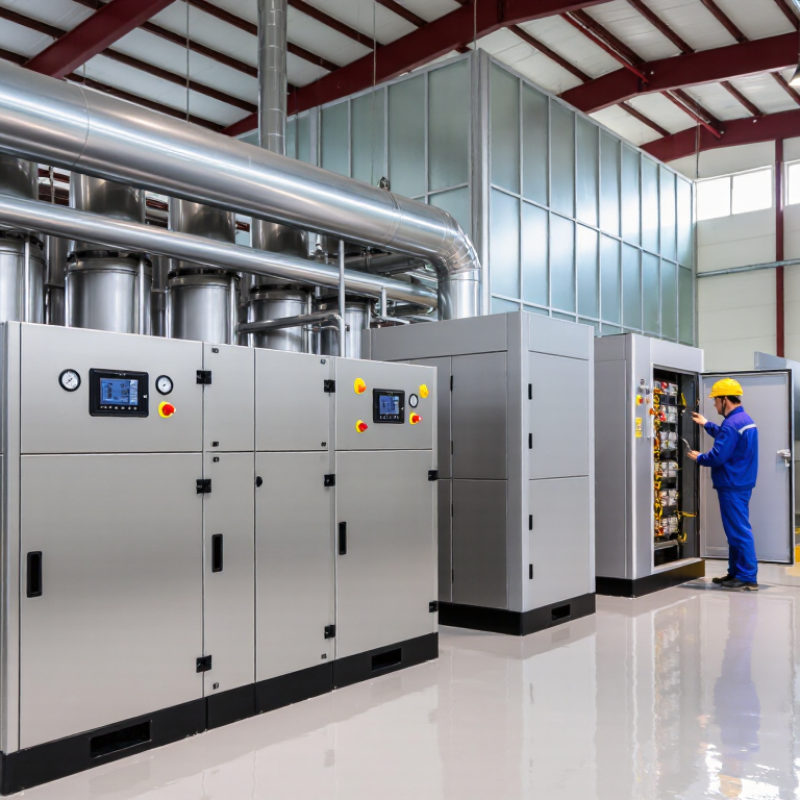
An air system is a connected set of equipment that moves, filters, heats, cools, or pressurizes air. It may include fans, ducts, filters, compressors, dryers, valves, and controls. The exact equipment depends on the job. The term can be a little vague, since building ventilation and factory compressed-air networks work differently. That distinction matters.
In offices, schools, and homes, ventilation and air-conditioning systems circulate indoor air and help manage temperature, humidity, and particles. A visible supply vent and a return grille are small parts of a larger network. In factories and workshops, compressed-air systems power tools, operate actuators, and support packaging lines. Air quality and pressure must match the equipment. Compressed air is not automatically suitable for breathing or sensitive processes.
Hospitals, laboratories, food-processing facilities, and warehouses also use specialized air systems. Some require controlled airflow, careful filtration, or steady temperature conditions. System design should account for room size, operating hours, noise, energy use, and maintenance access. A filter that is difficult to reach may be neglected, even when the technical design looks sound. Real performance depends on installation and upkeep, not just the equipment list.
China’s air-systems industry is a connected supply chain, not a single equipment category. It includes compressed-air machinery, ventilation and cooling equipment, plus filters, valves, motors, sensors, and control units. Upstream suppliers provide core components; manufacturers assemble complete systems; engineering firms size, install, and integrate them. Service companies then handle maintenance, leak checks, and efficiency upgrades at factories and commercial sites.
The market serves varied needs. A workshop may require a compact compressor and local piping, while a large plant needs coordinated equipment, storage tanks, dryers, and controls. The U.S. Department of Energy’s industry sourcebook notes that compressed air can account for about 10% of industrial electricity use, and sometimes much more at individual facilities. This is a useful efficiency benchmark, not a China-specific market statistic. It helps explain why system design and after-sales service matter alongside equipment output.
The structure is broad. That can be a weakness. Component quality, installation practices, and maintenance skills may differ between suppliers, so buyers often assess a whole system rather than a single machine. China’s manufacturing base supports both standardized products and project-specific solutions, but published data do not always separate air-system segments cleanly. That makes precise comparisons difficult. A careful assessment should check operating pressure, delivered air volume, energy use, noise, and service coverage under real site conditions.
China’s air systems market is led by different manufacturers in different segments, rather than by one clear winner. Industrial fan and blower producers serve factories, tunnels, and large ventilation projects. Their equipment moves high volumes of air, but buyers still need to check pressure, noise, and energy use at the actual operating point.
In building HVAC, manufacturers and system integrators supply air-handling units, ventilation equipment, and controls. A useful comparison looks beyond rated capacity: filter access, coil cleaning, and control stability matter during routine maintenance. Small details show up later. Compressed-air equipment is another major segment, serving workshops and production lines. Here, pressure stability and measured energy consumption can matter more than headline output.
Air filtration manufacturers focus on dust collection and clean-air applications, with performance shaped by filter media, sealing, and replacement intervals. A specification sheet cannot tell the whole story. Dust levels and humidity change real-world results. A neat ranking can mislead; available performance data is not always comparable across suppliers. Facility teams should compare test conditions, service coverage, and operating costs before choosing equipment.
China’s supplier leadership varies by segment. These indicative equipment capacity ranges show the scale of major air-system categories; they are not company rankings or market-share figures.
Capacity ranges are broad representative engineering ranges and vary by application and product design. Compressor and fan values refer to motor input power; chiller values refer to cooling capacity, so compare within each category rather than across categories.
China’s compressed-air manufacturers compete across rotary-screw, centrifugal, oil-free, and portable compressor lines. Many also supply dryers, filters, receivers, and control systems. That turns a machine purchase into a plant-wide decision. Small factories may favor robust screw units and nearby service. Large process sites often need steady airflow, oil control, and backup capacity. Fit matters more. Export-oriented suppliers may offer broader voltage options, while domestic projects often prioritize delivery and lifecycle support.
The U.S. Department of Energy’s guide, Improving Compressed Air System Performance, estimates that compressed air accounts for about 10% of industrial electricity use in the United States. This is a useful benchmark, not a China-specific market statistic. The guide also highlights leaks, pressure settings, and system controls as major efficiency factors. Compare specific power, part-load performance, noise, and service response—not rated capacity alone. Demand proof.
Tips: Ask suppliers to measure airflow and power at your operating pressure. Request a load-profile test and written service response times. One caveat: market rankings may define product categories differently, so headline claims deserve scrutiny.
Choosing a top air systems manufacturer in China starts with evidence, not broad claims. Ask how the supplier measures airflow, static pressure, noise, and power at the specified operating point. Test data should identify the equipment, method, and conditions, so comparisons remain meaningful. Look for engineering support that can size fans, filters, ducts, and controls around the actual building. A unit that performs well in a catalog may behave differently after installation. Details matter.
Materials and production controls deserve equal attention. Request drawings, inspection records, component traceability, and clear acceptance criteria. Confirm that efficiency and safety claims match relevant standards and can be independently verified. Then examine service readiness: spare-part lead times, troubleshooting guidance, warranty terms, and response arrangements. Speak with customers whose systems operate in similar climates or industrial conditions. A factory visit can reveal assembly discipline, but one visit is only a snapshot. No checklist is perfect. Compare suppliers using the same questions, and record unresolved points rather than smoothing them over. That step is easy to skip—and useful.