Top Industrial Air Conditioning Manufacturers Worldwide?
Industrial air conditioning is no longer a simple comfort system. It protects production lines, workers, equipment, and temperature-sensitive materials. In a steel plant, a food facility, or a data center, a failed compressor can stop operations within minutes. The stakes are practical.
The International Energy Agency’s The Future of Cooling report states that cooling already represents about 10% of global electricity consumption. It also warns that cooling demand could more than triple by 2050 without stronger efficiency measures. UNEP’s 2020 Cooling Emissions and Policy Synthesis Report adds that better equipment, refrigerants, and building design are essential for controlling future emissions. These findings give industrial buyers a wider evaluation framework than price alone.
This article examines leading industrial air conditioning manufacturers worldwide through that framework. It considers product range, energy performance, controls, refrigerant strategy, service coverage, reliability, and experience in demanding facilities. Companies such as Daikin, Trane, Carrier, Johnson Controls, Mitsubishi Electric, LG, and Gree often appear in global discussions, but their strengths differ by application and region. A manufacturer with excellent chillers may not be the best choice for a dusty factory or a high-humidity warehouse.
No ranking is flawless. Public revenue figures may combine residential, commercial, and industrial sales. Manufacturer claims also need independent verification. Therefore, this overview compares documented capabilities rather than repeating promotional language. Readers should still review local standards, lifecycle costs, spare-parts access, and qualified commissioning support before selecting equipment. Small details matter. A neglected filter, weak control sequence, or delayed service response can undermine an otherwise efficient system.
Definition and Role of Industrial Air Conditioning Systems
Top Industrial Air Conditioning Manufacturers Worldwide?
Definition and Role of Industrial Air Conditioning Systems
Industrial air conditioning systems are engineered solutions for controlling temperature, humidity, air movement, and indoor air quality. They serve factories, warehouses, data centers, laboratories, and large production facilities. Unlike residential units, these systems must operate across wider spaces and changing heat loads. Their role is not limited to producing cold air. They protect equipment, materials, workers, and temperature-sensitive processes.
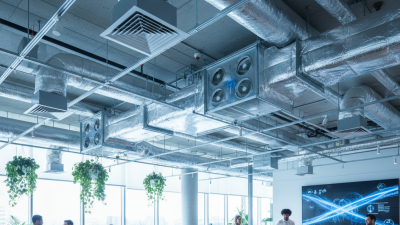
Temperature matters. Humidity matters too. In a factory, heat from motors, ovens, lighting, and machinery can quickly create unstable conditions. Excess moisture may damage packaging, encourage corrosion, or affect product consistency. Engineers usually examine building size, insulation, ventilation, occupancy, and equipment heat before selecting cooling capacity. A practical design may combine chillers, air handling units, filtration, sensors, and automated controls.
Reliable operation depends on maintenance as much as installation. Filters need regular inspection, while coils and drainage lines require cleaning. A blocked filter can reduce airflow and increase energy use within days. A door left open may also disturb carefully balanced conditions. That sounds simple, but busy facilities often overlook it. Energy efficiency deserves equal attention, although the cheapest system is not always the most economical. Poor controls, oversized equipment, or weak maintenance can erase expected savings. In real projects, assumptions sometimes fail after production changes, so monitoring and adjustment remain necessary.
Major Industrial Air Conditioning Manufacturers Worldwide
Major Industrial Air Conditioning Manufacturers Worldwide
Major industrial air conditioning manufacturers compete through efficiency, reliability, and application-specific engineering. Their systems serve factories, warehouses, cleanrooms, laboratories, and data facilities. According to the International Energy Agency’s The Future of Cooling report, space cooling demand could more than triple by 2050 without stronger efficiency measures. This pressure is changing equipment design.
Leading manufacturers now develop variable-speed compressors, heat-recovery systems, low-global-warming-potential refrigerants, and intelligent control platforms. The UNEP 2023 Global Status Report for Buildings and Construction reports that buildings consumed about 30% of global final energy in 2022. Industrial facilities add another challenge: dust, heat, vibration, and continuous operation. A practical evaluation should examine seasonal efficiency, filtration access, corrosion protection, spare-part availability, and local service skills. Numbers alone are not enough.
Field experience often exposes the gap between brochures and factories. A unit may achieve excellent laboratory efficiency but perform poorly after clogged filters or incorrect airflow balancing. The ranking is imperfect. Public market reports also use different definitions of “industrial HVAC,” making direct comparisons unreliable. Buyers should therefore review audited performance data, commissioning records, lifecycle costs, and response times. The strongest manufacturers usually provide detailed selection software, remote diagnostics, operator training, and maintenance documentation. Independent testing still matters.
How to Compare Manufacturers, Products, and Services
Choosing among top industrial air conditioning manufacturers requires more than comparing cooling capacity and purchase prices. Start with the site conditions: indoor heat loads, dust levels, humidity, operating hours, and available electrical capacity. A reliable manufacturer should explain its calculations clearly, provide test data, and recommend equipment suited to your actual process. Generic sizing often looks efficient on paper, but performs poorly beside furnaces, loading bays, or poorly insulated walls.
Compare products through measurable details. Check seasonal efficiency, sound levels, filtration stages, controls, refrigerant requirements, and access for cleaning. Ask how the system performs during partial-load operation, not only at peak capacity. Review warranties, spare-parts availability, technician training, commissioning procedures, and response times. Independent certifications and documented factory testing add confidence, although paperwork alone cannot prove field performance. Speak with comparable facility operators when possible. Their maintenance records may reveal issues that brochures omit.
Tips: Request a written lifecycle-cost estimate, including energy, filters, inspections, repairs, and downtime. Ask for a commissioning checklist and performance baseline. Do not accept the lowest quotation automatically. A cheaper unit may demand more cleaning or lose efficiency faster. I would also challenge my own assumptions: a familiar specification is not always the best specification for a changing factory. Get at least three comparable proposals, and make every supplier explain unclear exclusions in plain language.
Top Industrial Air Conditioning Manufacturers Worldwide? How to Compare Products and Services
Representative cooling-capacity benchmarks for common industrial HVAC system types. Values show the midpoint of typical published equipment ranges and are intended to support manufacturer, product, and service comparisons.
Water-cooled chillers generally provide the highest capacity, while rooftop packaged units and evaporative coolers are commonly selected for smaller or more localized industrial applications. Actual performance depends on climate, operating conditions, efficiency standards, controls, installation quality, and after-sales support.
Industry Trends Shaping the Global Air Conditioning Market
Industrial air conditioning is shifting from simple cooling equipment to connected infrastructure. Manufacturers worldwide now design systems around energy performance, refrigerant rules, and changing weather patterns. In a factory, a one-degree adjustment can affect worker comfort, product quality, and electricity demand. That relationship is easy to underestimate. Variable-speed compressors, electronically commutated fans, and heat-recovery modules are becoming more practical for large facilities. These features reduce wasted output during partial-load operation, where equipment often runs most of the day.
Low-global-warming-potential refrigerants are influencing product development, but adoption is not perfectly smooth. Safety requirements, technician training, component availability, and local infrastructure can slow deployment. A technically efficient system may still disappoint if filters clog in dusty production areas. Maintenance remains decisive. Remote monitoring is expanding through sensors that track pressure, temperature, vibration, and power consumption. Operators can identify a drifting fan or blocked coil before production suffers. However, alarms create noise when teams lack clear response procedures. That weakness deserves more attention.
Industrial buyers are also requesting modular systems, shorter installation windows, and easier access to replacement parts. Heat-pump technology is gaining interest where facilities need both cooling and process heat. Designers increasingly model climate extremes, including heat waves, humidity spikes, and water restrictions. Yet forecasts remain imperfect. Experienced project teams therefore compare simulation results with site measurements, operator feedback, and seasonal performance data. The strongest manufacturers are not judged only by name or capacity. Their credibility depends on documented testing, transparent efficiency claims, dependable service networks, and equipment that performs after installation.