What Are the Top Air Conditioning Duct Types?
Choosing an air conditioning duct type affects comfort, energy use, noise, and maintenance. The right option depends on the building, available space, and the quality of installation—not just the material. Sheet-metal ducts are durable and offer a smooth interior, but they need careful sealing and insulation. Flexible ducts can bend around joists and tight corners. Yet long runs, sharp bends, or compression can restrict airflow. Fiberglass duct board combines structure and insulation, though its surface needs protection from damage and dust.
Energy-efficiency expert Amory Lovins is often credited with the reminder, “The cheapest energy is the energy you don’t use.” For ductwork, that idea makes leakage and heat transfer worth examining alongside purchase cost. Still, no duct type saves energy by itself. Proper sizing, sealed joints, insulation, and balanced airflow matter. A shiny metal trunk can perform poorly if its branches are undersized. A flexible run can work well when it is short, supported, and gently curved.
This guide compares the top air conditioning duct types by construction, strengths, limitations, and suitable applications. It also considers practical details, such as attic temperatures, ceiling cavities, access for repairs, and the space available above a hallway. Small details matter. The trade-offs are not always neat: quieter operation, lower cost, and easier installation may point to different choices. Use the comparisons as a starting point, then confirm the design with a qualified HVAC professional familiar with the building.
How Air Conditioning Ducts Distribute Conditioned Air
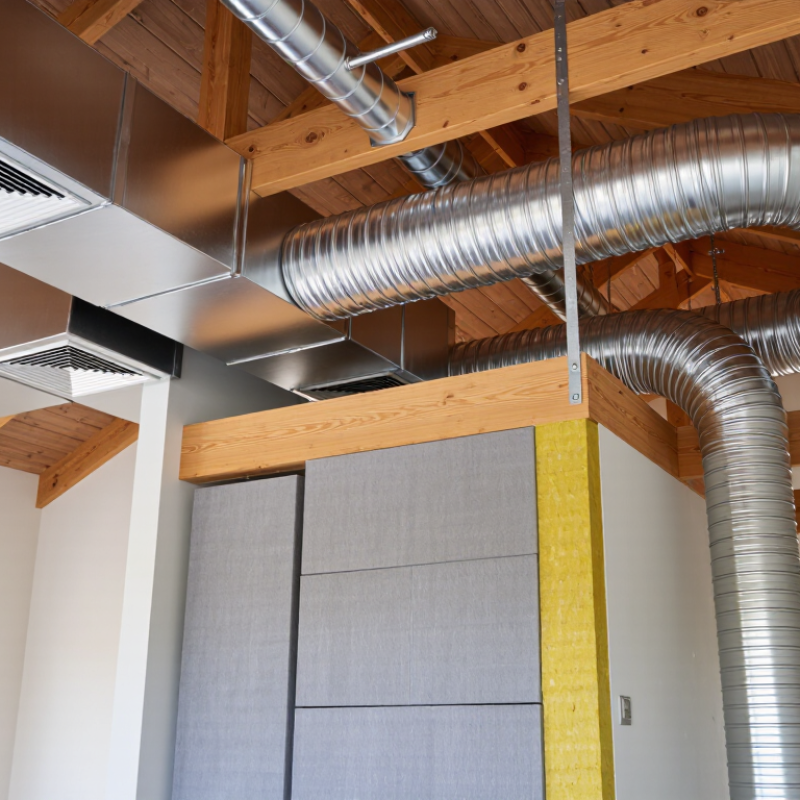
Air conditioning ducts move cooled air from the indoor unit to rooms through supply branches and registers. A separate return path carries warmer room air back for cooling again. This circulation works best when supply and return airflow stay reasonably balanced. If a bedroom door is closed and return air has no clear route, pressure can build and airflow may feel weak.
Duct type affects how air travels. Sheet-metal ducts have smooth interiors that can limit resistance when joints are sealed well. Flexible ducts can bend around framing, but sharp turns or compression may restrict airflow. Fiberglass-lined ducts can reduce noise, though their surfaces need appropriate care to remain clean. The material matters, but so do sizing, insulation, and installation. Small details matter.
At each branch, dampers and register openings help guide airflow to different rooms. A technician can check temperatures and airflow instead of relying only on how cold a vent feels. That distinction is easy to overlook. Even a carefully planned system may leave one room warmer because of sunlight, insulation gaps, or long duct runs. Distribution is not always perfect, so measurements and adjustments are more reliable than guesswork.
What Are the Top Air Conditioning Duct Types? — How Air Conditioning Ducts Distribute Conditioned Air
| Duct Type | Typical Construction | How It Distributes Air | Common Advantages | Key Considerations | Common Uses |
|---|---|---|---|---|---|
| Sheet-Metal Ducts | Sections made from galvanized steel or aluminum, joined and sealed into a duct network. | Rigid trunks and branches carry supply air from the air handler to registers; separate return ducts bring room air back to the system. | Durable, smooth interior surfaces can support efficient airflow when ducts are correctly sized and sealed. The interior can be accessed for inspection and cleaning. | Uninsulated sections can lose or gain heat in unconditioned spaces and may need external insulation. Poorly sealed joints can leak air. | Residential, commercial, and institutional systems, especially main trunks and long duct runs. |
| Flexible Ducts | A flexible plastic inner liner, usually supported by a wire helix, with insulation and an outer vapor-barrier jacket. | Connects a main duct or plenum to individual supply outlets, allowing air to reach rooms around obstacles. | Lightweight and adaptable; often useful for short connections where rigid ductwork would be difficult to install. | Must be properly supported, stretched, and routed. Kinks, compression, or excessive length can restrict airflow and increase resistance. | Branch connections to ceiling or wall registers in homes and other buildings. |
| Fiberglass Duct Board | Rigid panels made from bonded fiberglass insulation with a reinforced, air-resistant facing on the airstream side. | Fabricated into supply or return duct sections that carry air through a building, often with insulation built into the duct walls. | Built-in insulation can reduce heat transfer and help dampen some airflow noise. | Edges and joints need careful fabrication and sealing. The facing must remain intact, and the system should be maintained according to applicable codes and guidance. | Residential and light-commercial duct systems, particularly where insulated rigid ductwork is desired. |
| Fabric Ducts | Permeable or non-permeable textile ducting, typically suspended from a ceiling or other support. | Distributes supply air through designed openings or permeable fabric along the duct, rather than relying only on conventional registers. | Can provide broad, relatively even air delivery in suitable open spaces; fabric sections may be removable for laundering, depending on the design. | Requires a compatible system design and adequate support. It is generally intended for supply-air distribution, not as a standard return-air duct. | Large open rooms such as gyms, food-processing areas, and some commercial spaces. |
| Internally Lined Sheet-Metal Ducts | Rigid sheet-metal ductwork with an insulation or acoustic lining installed on the inside surface. | Moves conditioned air through the same trunk-and-branch layout as other rigid ducts, while the lining can reduce sound and heat transfer. | Combines a rigid duct structure with sound-control and thermal benefits where properly specified and installed. | The lining must be suitable for the application and kept in good condition. Design and maintenance should follow relevant codes and manufacturer guidance. | Commercial buildings and other systems where noise control is an important design consideration. |
Related Posts
-
Why Choose the Right Air Conditioning Duct?
-

2026 Top Home Air Conditioning Options You Need to Know?
-

Top 10 Industrial Air Conditioning Systems for Optimal Performance?
-

How to Choose the Best Aircon Trunking for Your Home Installation Needs
-

Understanding the Benefits of an Air Conditioning Box for Energy Efficiency
-

The Ultimate Guide to Choosing the Right Residential Air Conditioning System for Your Home