How Much Does Air Conditioning Installation Cost in 2026?
Air conditioning installation costs in 2026 can vary widely, even between homes on the same street. The final price depends on more than the equipment’s listed cost. System type, capacity, labor, and local market rates all matter. So does the condition of existing ductwork. A new central system may need different work from a ductless mini-split. Small details add up.
This guide explains the main cost factors and what a written estimate should include. It covers equipment, installation labor, duct repairs, electrical work, permits, and possible removal of an old unit. Efficiency ratings can affect the purchase price and future energy use, but savings depend on climate, home insulation, and usage. There is no single price that fits every property. A quote that seems low may exclude essential work. That is easy to miss. Before comparing bids, check that each contractor is pricing the same system scope and installation tasks. Ask whether the estimate includes startup testing, warranty details, and cleanup. Local prices and requirements can change, so confirm current figures with qualified HVAC contractors in your area. A little uncertainty remains until someone inspects the home.
2026 Cost Baseline: Angi Estimates Central AC Installation at $3,900–$7,900
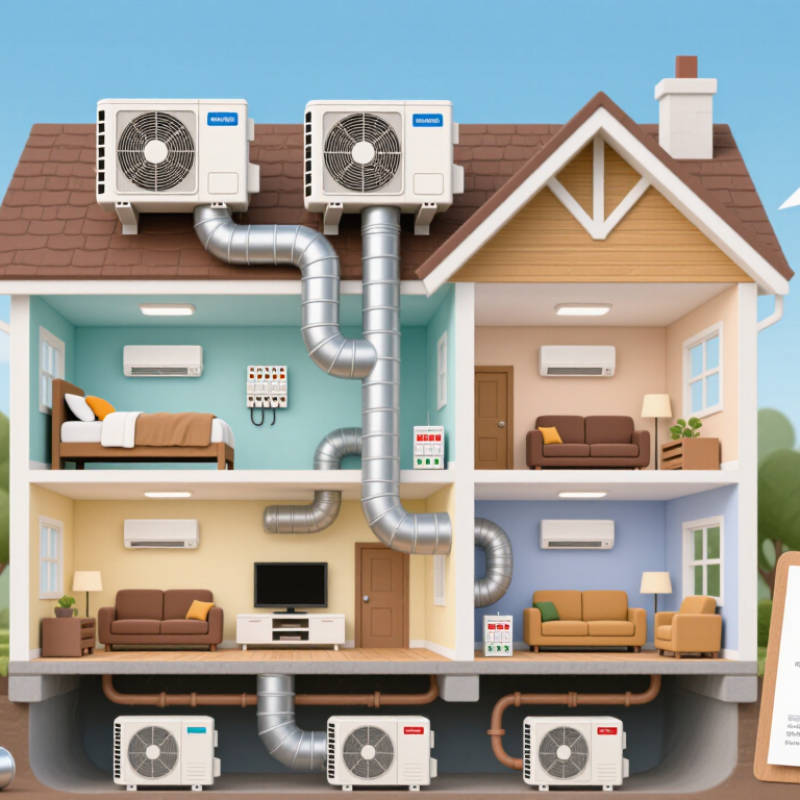
A practical 2026 baseline for central air conditioning installation is $3,900–$7,900. That range can help homeowners frame quotes, but it is not a guaranteed price. A straightforward replacement may cost less when existing ducts, wiring, and equipment connections are usable. New ductwork, electrical upgrades, difficult access, or a larger home can push the bill higher. Very few jobs are identical.
The estimate should clarify what it includes: equipment, labor, permits, old-unit removal, and duct repairs. Ask whether the contractor checked room sizes, insulation, window exposure, and airflow. Square footage alone can miss important heating and cooling needs. A common surprise is an add-on discovered after inspection. I would not treat the midpoint as a promise; online ranges simplify real homes. A written, itemized quote makes comparisons less slippery.
Tips: Get two or three itemized estimates, confirm warranty and permit responsibilities, and ask what could change the final price. Photograph visible duct or electrical issues. Keep assumptions in writing.
How Much Does Central AC Installation Cost in 2026?
Estimated installation costs range from $3,900 to $7,900.
The $5,900 midpoint is the arithmetic average of the stated low and high estimates. Actual costs vary by home and installation requirements.
System Type and Capacity: Compare Central AC, Ductless, and Heat Pumps
In 2026, installed air-conditioning costs depend heavily on system type and capacity.
As broad U.S. planning figures, central AC often runs about $5,000–$12,000. A single-zone ductless system may cost $3,000–$7,000, while multi-zone setups can reach $7,000–$15,000. Heat pumps commonly fall near $6,000–$14,000, depending on equipment and installation needs. These are estimates, not quotes.
Capacity matters as much as the system choice.
A contractor should calculate the home’s heating and cooling load, considering insulation, window exposure, ceiling height, and local weather. A larger unit is not automatically better. Oversized equipment can cycle on and off, leaving rooms clammy and wasting energy. Central AC may cost more if existing ducts need sealing or repair. Ductless systems avoid ductwork, but each indoor head adds expense. Heat pumps provide heating and cooling, which can make their higher upfront price worthwhile in some homes. It depends.
Compare written estimates with the same capacity assumptions and installation details. A tidy price chart can still mislead; replacing an old system is not always a simple swap. The duct condition, electrical work, and access to the installation area can change the final bill.
Home Sizing: ACCA Manual J Determines the Required Cooling Load
An air conditioner should be sized for the home, not guessed from its square footage. ACCA Manual J is a recognized method for estimating how much heat a house gains and how much cooling it needs. The result is a calculated load, often expressed in BTUs per hour. Small details matter.
A proper assessment considers floor area, ceiling height, insulation, window size and direction, air leakage, occupancy, and local weather. A west-facing room with large windows can heat up sharply in late afternoon. A shaded, well-insulated home may need less capacity, even if it has the same floor area. Duct condition and airflow also affect how well the system delivers cooling.
This calculation influences installation cost because the required capacity affects equipment selection and may reveal ductwork or insulation problems. Bigger is not automatically better. An oversized unit can cool quickly but cycle on and off often, which may reduce comfort and moisture removal. Ask the installer for the load calculation and the assumptions behind it. Check that room-by-room needs and existing ducts were considered. A calculation is only as reliable as its measurements, and older homes can hide surprises behind walls. I would not treat a quick estimate as proof that the proposed size is right.
How Much Does Air Conditioning Installation Cost in 2026? — Home Sizing: ACCA Manual J Determines the Required Cooling Load
Planning estimates for residential projects in the United States. Actual installed prices vary with location, equipment efficiency, installation complexity, and the home’s verified cooling load.
| Project type |
Typical installed cost (USD) |
Common scope |
Sizing and cost considerations |
| Central split air conditioner replacement |
$5,000–$12,000 |
Outdoor condenser and indoor coil replacement, refrigerant connections, startup, and basic installation labor. |
Price depends on the required capacity, efficiency level, compatibility with the existing furnace or air handler, and whether electrical or refrigerant-line work is needed. |
| New central AC with ductwork changes |
$7,000–$18,000+ |
Cooling equipment plus some combination of new or modified ducts, returns, registers, controls, and related installation work. |
Extensive duct replacement, difficult access, or major electrical upgrades can raise the total. Duct design and airflow should support the selected equipment. |
| Air-source heat pump installation |
$6,000–$14,000 |
Outdoor heat-pump unit and compatible indoor equipment, controls, refrigerant connections, and installation. |
Costs vary with system configuration, cold-weather performance, electrical requirements, and whether existing indoor equipment can be reused. |
| Single-zone ductless mini-split |
$3,000–$6,000 |
One outdoor unit and one indoor head, with a refrigerant line set, condensate drainage, and installation. |
Long line runs, challenging wall access, or a dedicated electrical circuit may add cost. Capacity should match the room’s calculated load. |
| Multi-zone ductless mini-split |
$7,000–$18,000+ |
One outdoor unit connected to multiple indoor heads for separate rooms or zones. |
Total cost is influenced by the number and type of indoor units, line-set routing, and the combined heating and cooling loads of the zones. |
| Standalone load calculation and system design |
$200–$700 |
Home-specific load assessment and sizing documentation; equipment installation is not included. |
Ask whether the work includes an ACCA Manual J calculation and whether duct design or equipment selection documentation is separate. |
Why Manual J matters: ACCA Manual J calculates a home’s heating and cooling loads using factors such as local climate, floor area, insulation, windows, orientation, air leakage, occupancy, and internal heat gains. Square footage alone is not a reliable way to select system capacity. These broad price ranges are budgeting estimates, not a quote; request a site-specific assessment and written scope before choosing equipment.
Efficiency Rules: DOE Split-System AC Minimums Are 14.3–15.2 SEER2
How Much Does Air Conditioning Installation Cost in 2026?
For a 2026 installation, efficiency rules can affect which split-system units are available and how much a quote includes. DOE minimums are 14.3–15.2 SEER2, depending on the applicable region and equipment category. SEER2 measures seasonal cooling efficiency under updated test conditions; it is not a promise of a specific utility-bill reduction. DOE’s 2023 efficiency standards set the current baseline. A higher-rated unit may cost more, but the final price also depends on sizing, labor, electrical work, and duct repairs. Small details matter. A unit that is too large can cycle on and off, even if its rating looks impressive.
The U.S. Energy Information Administration’s 2020 Residential Energy Consumption Survey reports that 88% of U.S. households used air conditioning. That widespread use makes equipment choice consequential, but household savings still depend on climate, insulation, and operating habits. Ask contractors to list the proposed unit’s SEER2 rating, cooling capacity, and any required site work separately. Compare written quotes on the same scope, not just the equipment price. A neat estimate can still leave out duct fixes.
Tips: Check the unit’s certification and local minimum before signing. Ask whether the quote includes permits, electrical upgrades, and removal of old equipment. Keep the paperwork.
Cost Add-ons: Assess Labor, Ductwork, Electrical Work, and Permits
In 2026, the equipment price is only part of an air conditioning installation bill. Labor depends on system size, access, and how much existing equipment can be reused. A straightforward replacement may take a crew less than a day, while a difficult attic or rooftop installation can take longer. Ask whether the quote includes removal, startup testing, and cleanup. Small omissions matter.
Ductwork can change the total sharply. Sealing a few loose joints costs less than replacing crushed, undersized, or poorly insulated runs. A technician may find problems behind a wall that were invisible during the initial visit. Request separate prices for repairs and full replacement, plus an explanation of what was inspected. A low estimate is not automatically a good one.
Electrical work may include a new circuit, wiring, disconnect, or panel upgrade. The cost depends on the home’s existing capacity and the route electricians must use. Permit fees also vary by location and project scope; confirm who applies and pays for them. Get these details in writing. Compare itemized estimates, not just totals, and leave room for surprises. Even careful inspections can miss something. Ask what changes would trigger extra charges before work begins.