Choosing the best aircon trunking in 2026 means looking beyond its colour or price. Trunking conceals and protects refrigerant pipes, cables, and drainage lines, while shaping how an installation looks and holds up over time. A neat cover can make a wall feel finished. A poorly matched one may crack, loosen, or leave awkward gaps around corners.
The right option depends on where the air conditioner is installed and what the route demands. PVC trunking is common for indoor runs because it is lightweight and easy to cut. Metal may suit locations where greater impact resistance is needed, while UV-resistant products can be worth considering for exposed outdoor sections. There is no universal winner. Wall material, pipe diameter, sunlight, rain exposure, access for future servicing, and the installer’s workmanship all matter. Even a sturdy product can disappoint if joints are poorly aligned or water can collect near the run.
This guide compares the main aircon trunking types by durability, appearance, installation needs, and value. It also explains which details deserve a closer look, including fittings, fasteners, and bends. These small parts matter. Product labels do not always tell the whole story, and conditions vary from one building to another. A choice that works well on a shaded balcony may age differently on a sunlit exterior wall. Treat the recommendations as practical guidance, then confirm product suitability with a qualified air-conditioning professional before installation.
What Is the Best Type of Aircon Trunking in 2026?
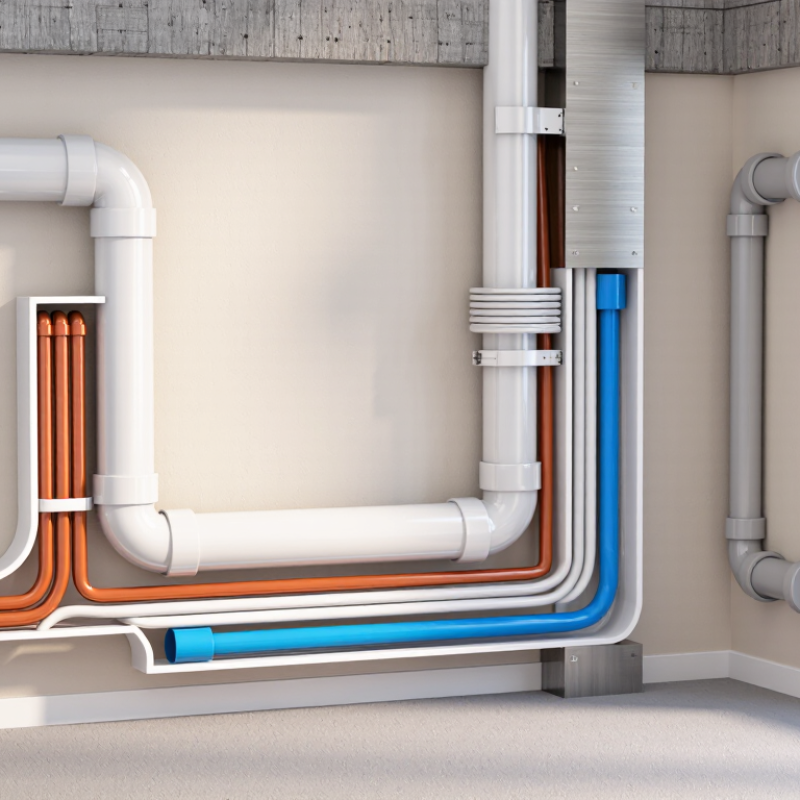
Good aircon trunking shields three vulnerable services: insulated refrigerant lines, electrical cables, and the condensate drain. Outdoors, rigid, UV-resistant trunking with a secure, removable cover handles sun and rain better than exposed insulation. Choose a channel wide enough to avoid crushing the refrigerant-pipe insulation or forcing tight bends. A squeezed line can lose insulation performance. Small detail. Big difference.
The International Energy Agency’s The Future of Cooling report projects global air-conditioner stock will rise from 1.6 billion units in 2016 to 5.6 billion by 2050. That growth makes sound installation and maintenance more important, though trunking alone cannot deliver efficient cooling. ASHRAE Standard 90.1-2022 sets pipe-insulation requirements for covered building systems, with thickness depending on pipe size and service conditions. A protective cover should preserve that insulation, not replace it.
Look closely at the drain route. It needs a continuous fall, secure supports, and no crushed sections where water can collect. Keep cable runs neat and protected from sharp edges; leave enough access to inspect joints later. On a wall, matching the trunking route to the actual pipe path often prevents awkward bends. I would not choose by appearance alone. Installers sometimes leave too little room for future access, and that is easy to regret.
What Aircon Trunking Protects: Refrigerant Lines, Cables, and Condensate Pipes
Common refrigerant-line sizes are shown as nominal copper-tube outside diameters, converted from inch sizes to millimetres. Actual line sizes depend on the air-conditioning unit. Choose trunking with enough room for the insulated refrigerant lines, cables, and condensate pipe; check the unit specifications and allow space for fitting and maintenance.
Indoor aircon trunking is often made from PVC because it is light, easy to cut, and simple to wipe clean. In a bedroom or hallway, it can conceal insulated refrigerant pipes without adding much visual bulk. Choose a size that leaves room for pipe bends and fittings. A tight cover can crush insulation or make future servicing awkward.
Outdoor conditions demand more care. Standard PVC may become brittle or discoloured after prolonged sun exposure, so look for UV-resistant material rated for exterior use. Coated metal trunking can offer stronger physical protection, especially near ground level, but damaged coatings may rust. In salty coastal air, check corrosion resistance rather than assuming all metal performs alike. Small details matter.
Tips: Check the maker’s temperature and weather ratings, and match them to the actual installation site. Allow for expansion, secure the cover against wind, and keep joints snug without blocking drainage. I would not choose by appearance alone; a neat-looking run can still trap water. Have a qualified installer confirm clearances and access before closing the trunking.
| Trunking Material | Indoor Suitability | Outdoor Suitability | Moisture and Corrosion | UV and Temperature Exposure | Impact and Maintenance | Relative Cost | Best-Fit Use |
|---|---|---|---|---|---|---|---|
| UV-stabilised PVC | Very suitable for concealing air-conditioning pipework in homes and commercial interiors. | Suitable when the product is specifically rated for outdoor exposure and installed according to its instructions. | Does not rust; generally handles damp conditions well. Joints and covers still need to be fitted correctly to limit water entry. | Standard indoor PVC can discolour or become brittle in sunlight. UV-stabilised grades are designed to withstand greater exposure; check the product’s temperature limits. | Lightweight and easy to cut. Can crack under strong impact, especially in cold conditions; covers may need periodic inspection. | Low | A practical, economical choice for most indoor installations and many sheltered outdoor runs. |
| Aluminium | Suitable where a rigid, neat finish or a metal appearance is desired. | Often suitable for exposed locations when the grade, finish, and fittings are appropriate for the environment. | Does not develop red rust like ordinary steel, but can corrode in aggressive environments, including some coastal or chemically polluted locations. | Unaffected by sunlight in the way many plastics are. Its suitability still depends on the alloy, coating, and the temperature limits of seals and accessories. | Rigid but may dent. Metal edges and cut ends should be handled and finished carefully; inspect coatings and joints over time. | Medium to high | Visible or exposed installations where a durable metal finish is preferred and the surroundings are compatible with the selected grade. |
| Galvanised steel | Suitable for robust installations where a metal enclosure is required. | Can be used outdoors if the protective coating and system are intended for the exposure conditions. | The zinc coating helps protect the steel, but damaged coatings, cut edges, and prolonged wet or salty exposure can lead to corrosion. | Unaffected by UV exposure. Protective finishes, seals, and accessories must suit the operating environment. | Strong and resistant to many impacts, but heavier than plastic or aluminium. Coating damage should be repaired using an appropriate method. | Medium | Locations needing a strong enclosure, particularly where mechanical protection is more important than low weight. |
| Stainless steel | Suitable for demanding or hygiene-sensitive settings when the selected grade and finish are appropriate. | Can perform well outdoors, but resistance varies by stainless-steel grade and exposure; coastal conditions require careful specification. | High corrosion resistance compared with ordinary steel, but not immune to corrosion in every environment. Avoid unsuitable grades and contamination from other metals. | Unaffected by UV exposure; seals and other non-metal components may have separate limits. | Strong and durable, but fabrication and cutting can be more demanding. Surface condition and correct installation matter. | High | Harsh or specialist environments where corrosion resistance justifies the higher material cost. |
| ABS plastic | Can be used indoors where the product is designed for the application and installation requirements. | Use outdoors only when the specific product is rated for UV and weather exposure; not all ABS trunking has this rating. | Will not rust, although prolonged exposure, unsuitable cleaners, or incompatible materials can affect performance. | Outdoor performance varies by formulation. Unrated products may degrade or discolour in sunlight; follow stated temperature limits. | Impact performance depends on product design and temperature. Check cover fit and inspect exposed runs periodically. | Low to medium | Indoor applications or protected locations where a suitable product is readily available. |
Practical takeaway: UV-stabilised PVC is often a cost-effective choice for typical indoor air-conditioning pipe runs and many sheltered outdoor installations. For fully exposed, coastal, high-impact, or otherwise demanding locations, select a trunking system specifically rated for those conditions. Protect and insulate refrigerant pipes as required by the air-conditioning system design; trunking is an enclosure, not a substitute for pipe insulation or correct weatherproofing.
For air-conditioning trunking, EN 50085-2-1 and IEC 60529 answer different questions. EN 50085-2-1 sets requirements and tests for cable trunking systems mounted on walls or ceilings. It addresses features such as construction, mechanical strength, and safe installation. It is not, by itself, an IP water-resistance rating. Check that the product’s stated scope covers your intended use; refrigerant-pipe covers may not fall within the same product category.
IEC 60529 uses the IP code to describe protection against access, solid objects, and water. For example, an outdoor run exposed to rain needs a suitable, verified water-protection rating—not just a sturdy-looking lid. That distinction matters. Ratings apply to tested configurations, so joints, bends, end caps, and installation details can affect protection. A missing end cap can leave a clear path for splash or dust. In practice, compare the declared IP rating with the actual exposure, and follow the installation instructions. I would not assume that a high IP code guarantees long-term performance if seals are poorly fitted or maintenance is neglected. Check the documentation carefully.
Selecting aircon trunking begins with the line set, not the trunking’s outside dimensions. Check the installation manual for the specified liquid and gas pipe sizes, insulation thickness, drain hose, and cable requirements. Copper pipe sizes alone do not show how much space the insulated bundle needs. Measure the complete run, including insulation. Do not guess.
Use the trunking’s clear internal dimensions to check that every component fits without being squeezed. Compression can damage insulation and make future servicing harder. Leave practical space for bends and access, especially near indoor units and wall penetrations. Manufacturer instructions may specify minimum bend radii or routing limits; follow those details for the exact system. I still find bend space easy to underestimate.
For a straight section, compare the measured bundle with the usable channel width and depth, then allow room to position the pipes neatly. At corners, check that covers close without forcing them over the line set. A slightly larger trunking section can make installation and inspection easier, but excessive empty space may look untidy. Check dimensions at joints and elbows too. Specifications vary, so confirm the full route before ordering. An on-site measurement can still be imperfect; verify tight points before cutting.
For exposed air-conditioning lines, metal-bodied trunking with a UV-stable finish often gives the strongest balance of sunlight resistance, fire behavior, and access for servicing. Unlike plastic, metal does not rely on UV additives to resist sunlight, and its removable cover makes pipe inspections less destructive. Check the coating and fixings, though; coastal salt and trapped moisture can still cause corrosion. Details matter.
Plastic trunking can be lighter and easier to cut, but its outdoor life depends heavily on the resin, stabilizers, and installation. ASTM G154 describes accelerated weathering tests that combine UV exposure and condensation; one common cycle uses eight hours of UV at 60°C, followed by four hours of condensation at 50°C. For fire performance, IEC 60695-11-10 classifies plastics using small-scale burning tests. Those results do not automatically establish how a complete installed system performs. I would compare test evidence for the actual product, not rely on “UV-resistant” or “fire-rated” wording alone. A practical choice is metal for harsh, exposed routes and tested polymer trunking for sheltered runs where easy cutting matters. Some installations still need better access planning.