What Are the Top 10 Types of Home Air Conditioning Systems?

Choosing among the top 10 home air conditioning systems is not simply a matter of buying the coldest unit. Homes differ in size, insulation, humidity, room layout, electricity prices, and local climate. A quiet ductless mini-split may suit a renovated apartment. A central system may better serve a family house with existing ductwork. Portable and window units can solve smaller problems, but they may sacrifice efficiency and comfort. The U.S. Department of Energy notes that cooling can represent about 6% of national electricity use. The International Energy Agency’s The Future of Cooling report also warns that global cooling demand could more than triple by 2050 without stronger efficiency improvements.

Building scientist Allison A. Bailes III offers a useful principle: “A house is a system.” That idea matters here. An oversized air conditioner may cool a room quickly, yet leave moisture behind. Poorly sealed ducts can waste conditioned air inside an attic. An efficient heat pump can perform impressively, but only when installed and sized correctly. This guide compares ten major system types through practical details, including operating method, installation needs, noise, maintenance, and likely energy performance. It also considers recognized measures such as SEER2, EER2, and HSPF2, while drawing on guidance from the U.S. Department of Energy, ENERGY STAR, and AHRI. No ranking fits every home. That is the uncomfortable part. Product labels help, but real comfort depends on design, workmanship, and daily use.

What Are the Top 10 Types of Home Air Conditioning Systems?

Classify 10 Systems by Distribution: Central, Ductless, Packaged, Room, and Portable

What Are the Top 10 Types of Home Air Conditioning Systems?

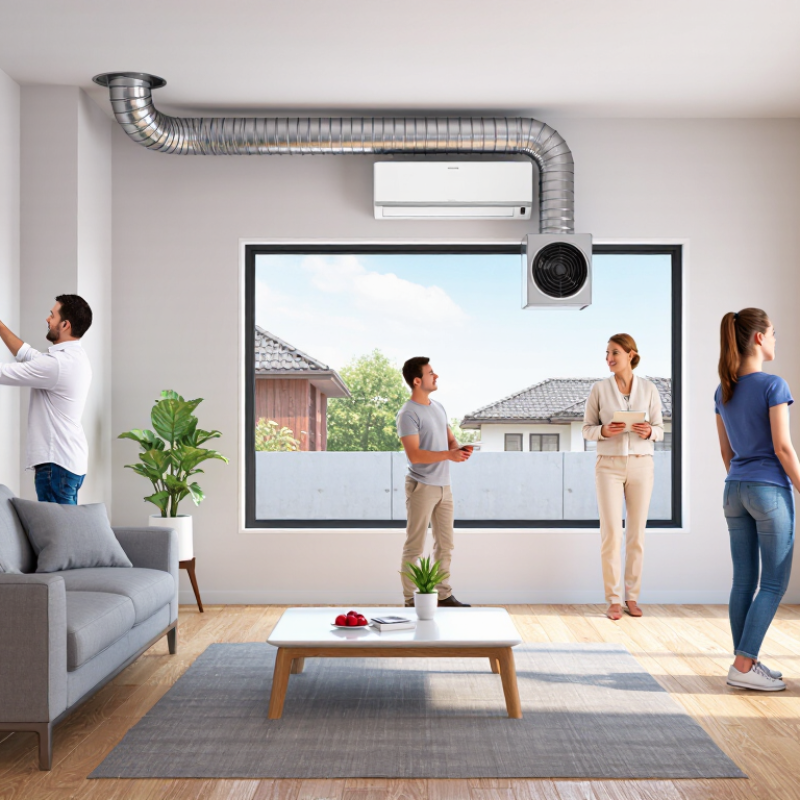
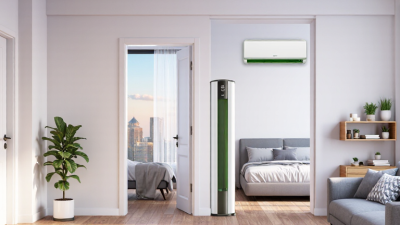
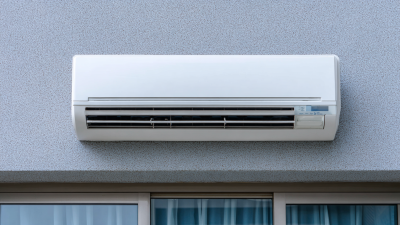
Air conditioning systems differ mainly by how they distribute cooled air. Central systems include split central air conditioners and central heat pumps, both using ductwork to serve several rooms. Ductless systems include single-zone mini-splits and multi-zone mini-splits, which use indoor wall units instead of ducts. Packaged systems place major components outdoors, including packaged air conditioners and packaged heat pumps. Room systems include window air conditioners and through-the-wall units. Portable systems include single-hose and dual-hose models, which sit indoors and connect through a window opening.

Tips: Measure each room before choosing capacity. Oversized equipment may cool quickly but remove less humidity. Check filter access, outdoor clearance, drainage, and expected noise. A qualified technician should verify airflow and electrical requirements. Small details matter.

In practical home assessments, ducted systems often provide the most even temperature, but installation can be disruptive. Ductless units suit older homes or additions, although indoor units remain visible. Packaged equipment saves indoor space, yet service access deserves attention. Window and portable systems are easier to install, but their coverage is limited. Dual-hose portable units can perform better in some rooms, though results vary with window sealing. I once underestimated afternoon sun through a glass door; the selected capacity felt adequate in the morning but struggled later. That mistake still matters.

Compare Evaporative, Heat-Pump, VRF, Geothermal, and Hybrid Designs

Home air conditioning comes in ten common forms, including central split, ductless mini-split, multi-split, packaged, window, portable, evaporative, heat-pump, VRF, and geothermal systems. The right choice depends on climate, building layout, budget, and electricity supply. The International Energy Agency reports that space cooling used about 10% of global electricity in 2018. That figure makes efficiency more than a comfort issue.

Evaporative coolers suit dry regions, where moving air across wet pads can provide strong cooling with modest electricity use. They perform poorly in humid weather. Heat pumps provide both cooling and heating, while U.S. Department of Energy guidance indicates they can cut heating electricity use by about 50% compared with resistance heating. VRF systems use variable refrigerant flow and separate zones efficiently, making them practical for offices, hotels, and larger homes. However, controls and commissioning are demanding. Small mistakes matter.

Geothermal systems exchange heat with the ground, offering stable performance but requiring drilling, land access, and high installation costs. Hybrid designs combine a heat pump with another heating source, allowing automatic switching during extreme temperatures. ASHRAE emphasizes proper sizing, airflow, and commissioning across HVAC applications. A system that is oversized may cycle frequently and leave rooms damp. That is easy to miss. In real homes, insulation, duct leakage, filter maintenance, and occupant habits can outweigh impressive equipment ratings. My caution is simple: published efficiency is not the same as measured performance.

What Are the Top 10 Types of Home Air Conditioning Systems?

The chart compares typical equipment life in years. Actual service life depends on climate, installation quality, maintenance, operating hours, and component replacement. Heat pumps provide both heating and cooling, while evaporative coolers generally use less electricity but require a suitable dry climate.

Use DOE SEER2, EER2, and HSPF2 Ratings to Compare Efficiency

Choosing among the top ten home air conditioning systems starts with the right efficiency comparison. Common options include central split systems, packaged units, ductless mini-splits, multi-splits, variable-refrigerant-flow systems, heat pumps, window units, portable units, geothermal systems, and evaporative coolers.

DOE SEER2 measures seasonal cooling efficiency. A higher SEER2 rating usually means less electricity during a typical cooling season. EER2 measures performance under a fixed outdoor temperature, so it helps compare demanding summer conditions. These numbers are not interchangeable. A system with strong SEER2 performance may deliver different results during a very hot afternoon.

For heat pumps, HSPF2 measures seasonal heating efficiency. Compare it alongside SEER2, especially in homes that use one system year-round. Check ratings within the same capacity range, because larger equipment can produce different results. Installation also matters. Poor duct sealing, incorrect refrigerant charge, or oversized equipment can waste the efficiency shown on the label.

Ductless systems often avoid duct losses. That sounds simple. Yet room layout and airflow still matter. Window and portable units may have lower purchase costs, but their ratings and testing methods can differ from whole-home systems. Evaporative coolers use much less energy in dry climates, but they are not suitable everywhere.

“ In my experience, the highest rating is not automatically the best choice. A moderate-rated system, correctly sized and maintained, may perform better than a premium-rated system installed poorly. Recheck local climate, operating hours, insulation, and electricity prices before deciding. Ratings guide the decision, but real homes remain imperfect.

Assess Capacity, Noise, Duct Losses, and ENERGY STAR Performance Data

What Are the Top 10 Types of Home Air Conditioning Systems?

The ten common choices include central split, packaged, ductless mini-split, multi-split, variable-refrigerant-flow, window, portable, evaporative, geothermal, and air-source heat pump systems. Capacity must match the home, not merely its floor area. Oversized equipment may cool quickly but cycle poorly, leaving rooms damp. Undersized equipment can run continuously on a hot afternoon. A qualified load calculation is more reliable than a sales estimate.

Noise also changes the daily experience. Window and portable units may sound sharp beside a bed. Outdoor compressors can disturb patios or nearby rooms. Duct losses deserve equal attention. Poorly sealed ducts in a hot attic waste cooling before it reaches the living space. Ductless systems avoid most distribution losses, though indoor heads need careful placement. ENERGY STAR performance data can help compare eligible models through efficiency ratings, tested capacity, and estimated energy use. Those figures are useful, but installation quality still matters.

Tips: Measure room temperature, humidity, and sound before replacing equipment. Ask for tested capacity at your local design temperature. Inspect ducts for crushed insulation, loose joints, and dusty insulation. Check filter access, service space, and condensate drainage. A quieter system may justify a slightly higher cost. I have seen efficient equipment perform poorly after rushed installation. That is easy to overlook. Recheck the assumptions.

What Are the Top 10 Types of Home Air Conditioning Systems? - Assess Capacity, Noise, Duct Losses, and ENERGY STAR Performance Data

System Type Typical Residential Cooling Capacity Typical Indoor Sound Level Duct or Distribution Losses Common Efficiency Data and ENERGY STAR Status Advantages Limitations and Best Applications
Central Split Air Conditioner 18,000–60,000 Btu/h
(1.5–5 tons)
Approximately 55–75 dBA near the indoor air handler; the outdoor condenser is commonly about 55–75 dBA. Approximately 10%–30% when ducts are located in attics, crawlspaces, garages, or other unconditioned areas. Well-sealed ducts inside the conditioned envelope have much lower losses. Uses SEER2 and EER2. ENERGY STAR qualified split systems generally meet a current minimum of about 15.2 SEER2 and 12.0 EER2, subject to equipment configuration and regional requirements.
  • Provides whole-home cooling.
  • Works with existing forced-air heating systems.
  • Offers a wide range of capacities and two-stage or variable-speed options.
Requires ductwork and professional sizing. Best for homes that already have a suitable air-distribution system.
Packaged Central Air Conditioner 24,000–60,000 Btu/h
(2–5 tons)
Approximately 60–75 dBA near the outdoor cabinet, depending on fan speed and installation. Approximately 10%–30% if supply and return ducts run through unconditioned spaces. Uses SEER2 and EER2. ENERGY STAR qualified single-package systems commonly meet approximately 14.3 SEER2 and 11.7 EER2 minimum thresholds, with details depending on the certified configuration.
  • Combines the compressor, condenser, evaporator, and air handler in one cabinet.
  • Saves indoor mechanical-room space.
  • Suitable for homes with existing ductwork.
Usually installed outdoors or on a roof. A single failure can disable the complete heating and cooling package.
Ductless Mini-Split Air Conditioner 6,000–36,000 Btu/h
(0.5–3 tons per outdoor unit)
Indoor units are commonly about 19–40 dBA on low speed; outdoor units are often about 45–60 dBA. Usually below 5% because refrigerant lines replace long air ducts. Short condensate and airflow paths still require correct installation. Uses SEER2, EER2, and sometimes combined heating metrics. ENERGY STAR qualified ductless systems commonly publish SEER2 values around 16–30 or higher; exact qualification depends on the product type and current specification.
  • High efficiency at part-load operation.
  • Individual room temperature control.
  • Useful for additions, renovated rooms, and homes without ducts.
Indoor wall, floor, or ceiling units are visible. Multiple rooms may require several indoor heads or a multi-split design.
Ductless Multi-Split System 18,000–60,000 Btu/h total
(1.5–5 tons)
Approximately 19–45 dBA indoors; outdoor sound is commonly about 45–65 dBA. Usually below 5%; distribution occurs through refrigerant piping rather than extensive supply ducts. Uses system-level SEER2 and EER2 ratings. Qualified configurations may reach roughly 16–28 SEER2 or more, but the rating depends on the outdoor unit, indoor-head combination, and controls.
  • One outdoor unit can serve several indoor zones.
  • Allows room-by-room control.
  • Generally quieter and more efficient than ducted distribution.
Capacity balancing and piping design are important. A fault in the outdoor unit can affect multiple zones.
Variable Refrigerant Flow or Variable Refrigerant Volume System 24,000–96,000 Btu/h
(2–8 tons for many residential applications)
Approximately 25–45 dBA indoors; outdoor units are commonly about 50–70 dBA. Approximately 5%–15% for ducted indoor units; ductless indoor units can reduce distribution losses further. Performance is reported with SEER2, EER2, IEER, or manufacturer-specific combination ratings. There is no single universal residential ENERGY STAR threshold for every VRF configuration, so the complete matched system should be checked in the official certification database.
  • Excellent zoning and part-load control.
  • Can serve many rooms from one or more outdoor units.
  • May support heat recovery and simultaneous zone operation.
Higher design and installation complexity. More common in large homes or projects requiring many independently controlled zones.
Air-Source Heat Pump in Cooling Mode 18,000–60,000 Btu/h
(1.5–5 tons)
Approximately 45–75 dBA outdoors and 55–70 dBA indoors for ducted systems; ductless indoor units are generally quieter. Approximately 10%–30% with conventional ducts in unconditioned spaces; below 5% for ductless designs. Uses SEER2 and EER2 for cooling and HSPF2 for heating. ENERGY STAR qualified split heat pumps commonly meet approximately 15.2 SEER2, 12.0 EER2, and 8.5 HSPF2 or higher, depending on the certified configuration.
  • Provides both cooling and heating.
  • Can reduce the need for separate heating equipment.
  • Variable-speed models can maintain stable indoor temperatures.
Cold-climate performance, backup heat, electrical service, and local operating temperatures must be evaluated before installation.
Ground-Source or Geothermal Heat Pump 24,000–72,000 Btu/h
(2–6 tons)
Approximately 40–60 dBA indoors; outdoor compressor noise is minimal because the heat-exchange equipment is usually indoors. Approximately 5%–15% for properly sealed ductwork. Ground loops do not create air-distribution losses. Cooling efficiency is commonly expressed as EER rather than SEER2. ENERGY STAR geothermal requirements vary by loop type; a representative closed-loop threshold is about 17.1 EER, while open-loop requirements are higher.
  • Stable ground temperatures can produce high efficiency.
  • Low outdoor noise.
  • Provides heating, cooling, and often domestic hot-water support.
Drilling or trenching creates high initial costs and site requirements. A qualified designer must evaluate soil, groundwater, and available land.
Evaporative Cooler 3,000–25,000 Btu/h of nominal cooling effect, depending on airflow, humidity, and outdoor conditions Approximately 50–70 dBA near the fan and cooler cabinet. Approximately 5%–20% for ducted models; losses depend on duct placement and air leakage. Does not use SEER2 or EER2 because it cools by water evaporation rather than a vapor-compression refrigeration cycle. It is not directly comparable with ENERGY STAR refrigerated air-conditioner ratings.
  • Low electricity use in dry climates.
  • Introduces filtered outdoor air while cooling.
  • Generally has a simpler refrigeration-free design.
Performance declines sharply in humid weather. Requires water, regular pad maintenance, and adequate exhaust or open windows.
Window Air Conditioner 5,000–25,000 Btu/h
(approximately 0.4–2 tons)
Approximately 50–65 dBA indoors, depending on compressor operation, fan speed, and window mounting. There are no long ducts, but leakage around the window panel can reduce performance and increase outdoor-air infiltration. Uses CEER, which includes operating and standby energy. ENERGY STAR qualified room air conditioners must meet current capacity-specific efficiency requirements; efficient models commonly show CEER values of approximately 11–15 or higher.
  • Low purchase and installation cost.
  • Useful for one room or a small apartment.
  • Easy to replace without modifying central ductwork.
Limited whole-home coverage, reduced window access, and possible security concerns. Correct sizing is important to avoid short cycling.
Portable Air Conditioner 8,000–14,000 Btu/h using the newer seasonally adjusted rating method; older labels may show higher ASHRAE capacity figures Approximately fifty-five–70 dBA indoors, with compressor and fan noise in the occupied room. Exhaust hose and window-panel leakage can cause meaningful losses. Single-hose units can also draw warm outdoor air into the room; dual-hose designs generally reduce this effect. Capacity may be listed under both DOE seasonally adjusted Btu/h and older ASHRAE Btu/h methods. Portable air conditioners generally do not have a universal ENERGY STAR room-air-conditioner qualification category, so compare the current DOE energy label and measured energy-efficiency information.
  • Requires no permanent wall or window-unit installation.
  • Can be moved between rooms.
  • Suitable for temporary cooling or rental housing.
Usually noisier and less efficient than window or split systems. The exhaust hose must be sealed carefully, and condensate management is required.

Measurement notes: Cooling capacity is shown as nominal output; actual sizing depends on climate, insulation, solar exposure, occupancy, and building design. Sound levels are typical approximate ranges measured near operating equipment and can vary substantially with distance, mounting, fan speed, and acoustic conditions. Duct-loss percentages are common planning ranges, not guaranteed values.

Reference framework: Efficiency terms and certification comparisons are based on U.S. Department of Energy test methods and ENERGY STAR residential air-conditioner, heat-pump, room-air-conditioner, and geothermal-heat-pump criteria. Current requirements should be verified at ENERGY STAR.gov and Energy.gov before equipment selection.

Match Climate and Building Type Using DOE and ACCA Sizing Standards

What Are the Top 10 Types of Home Air Conditioning Systems?

Match Climate and Building Type Using DOE and ACCA Sizing Standards

Choosing among ten common systems starts with the building, not the equipment label. Options include central split systems, packaged units, ductless mini-splits, multi-split systems, variable refrigerant flow systems, air-source heat pumps, geothermal systems, window units, portable units, and evaporative coolers. Hot, humid climates usually need dehumidification, while dry regions may benefit from evaporative cooling. Coastal homes need corrosion-resistant installation details. Mountain homes may require different airflow planning.

ACCA Manual J provides a room-by-room cooling-load method. DOE guidance also emphasizes efficient equipment, proper installation, and climate-based performance. Square footage alone is weak evidence. Sun-facing glass, insulation, air leakage, ceiling height, occupancy, and kitchen heat can change the result.

A shaded bedroom and a west-facing attic do not behave alike.

For a small apartment, a ductless mini-split can avoid major ductwork. A larger house may suit a central split system with balanced ducts. Packaged equipment can serve homes with limited indoor mechanical space. Window and portable units fit temporary or single-room needs, but their control can be uneven. Evaporative coolers often perform poorly in humid air.

In field assessments, oversized systems repeatedly cause short cycling and clammy rooms. That mistake feels convenient. It is not. Even a careful load calculation can miss future renovations, so the final design deserves a second review before installation.