Top China Home Air Conditioning Manufacturers?
China’s home air conditioning industry is entering a more demanding phase. Buyers now expect quiet cooling, lower energy use, reliable controls, and dependable after-sales service. This shift makes manufacturer rankings harder than simple sales comparisons.
The International Energy Agency reports that space cooling uses nearly 10% of global electricity. It also projects that the number of air conditioners worldwide could reach 5.6 billion by 2050. China will remain central to this growth, both as a major producer and a large consumer. The China Household Electrical Appliances Association has repeatedly highlighted energy efficiency, intelligent manufacturing, and product upgrades as key industry directions. These trends shape how leading Chinese brands should be evaluated.
Fatih Birol, Executive Director of the IEA, warned: “The world is facing a cooling crunch.” His statement explains why home air conditioning deserves closer technical scrutiny. A lower purchase price may hide higher electricity costs, weak installation support, or poor performance in humid climates. A polished app is not enough.
This guide examines leading China home air conditioning manufacturers through practical criteria. These include cooling performance, seasonal efficiency, compressor technology, noise levels, smart features, warranty coverage, and export experience. Brands such as Gree, Midea, Haier, Hisense, and AUX often appear in international market discussions. However, no ranking is perfect. Market shares differ by source, and regional product lines can vary sharply.
Real-world details matter. A bedroom unit should cool evenly at night. A living-room system must handle repeated summer peaks. The best manufacturer is not always the most famous one. It is the one that performs reliably after installation, during heat, dust, and years of daily use.
China’s Home Air Conditioning Manufacturing Industry
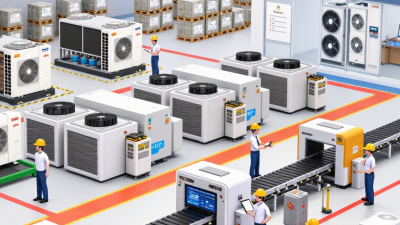
China’s home air-conditioning industry is less a single factory story than a coordinated manufacturing ecosystem. National Bureau data recorded about 223.5 million room air conditioners produced in 2023, according to the China Household Electrical Appliances Association’s 2024 industry review. This scale supports suppliers for compressors, heat exchangers, motors, controls, plastics, and copper tubing. A production line may move from brazing and leak testing to vacuuming, refrigerant charging, and performance checks. Small defects matter. One loose connection can create noise, leakage, and wasted energy.
Leading manufacturers compete through measurable engineering, not only low prices. China’s energy-efficiency standards have encouraged variable-speed compressors, larger heat-transfer surfaces, quieter fans, and connected diagnostics. The International Energy Agency’s The Future of Cooling report warns that global cooling electricity demand could more than triple by 2050 without stronger efficiency measures. This explains China’s focus on inverter control, seasonal efficiency, and heat-pump operation. However, efficiency labels do not reveal everything. Actual performance changes with outdoor dust, voltage variation, refrigerant charging, and installer skill.
Factory capacity can hide uneven reliability. Buyers should review traceable test records, compressor matching, noise measurements, spare-parts plans, and warranty response times. I would not treat the largest output as the safest choice. Transparent testing may matter more. The industry still needs clearer lifecycle data and less dependence on headline production totals.
Leading Home Air Conditioning Manufacturers in China
Choosing leading home air conditioning manufacturers in China requires more than comparing factory prices. A dependable supplier should demonstrate stable production, tested components, and clear quality procedures. Look for manufacturers with dedicated laboratories, automated assembly lines, and experienced engineering teams. Their product range may include wall-mounted units, portable systems, and multi-room solutions. This variety can support different housing layouts and climate conditions.
Practical sourcing experience shows that factory communication matters greatly. Ask for performance data, noise measurements, energy-efficiency ratings, and sample inspection records. Reliable manufacturers explain compressor selection, airflow design, filter maintenance, and warranty coverage without vague promises. They should also provide recognized safety documentation for your target market. A factory visit can reveal useful details, such as orderly warehouses, calibrated testing equipment, and well-labeled spare parts. A polished showroom is not enough.
Tips: Request a working sample before placing a large order. Test cooling speed, sound levels, remote controls, and drainage performance. Confirm packaging strength with a drop-test report. Discuss replacement parts and service response times early. Do not judge quality from price alone. I once underestimated after-sales support, and the lower quotation created higher costs later. Manufacturers may also need clearer documentation than expected. That small weakness deserves attention before long-term cooperation.
Key Product Categories and Cooling Technologies
China’s home air-conditioning manufacturers cover several product categories, each suited to different spaces. Wall-mounted split units serve bedrooms and small living rooms. Floor-standing systems suit larger open areas. Multi-split and VRF systems connect several indoor units to one outdoor unit, improving space use. Chillers and air-source heat pumps support larger homes, villas, and low-temperature heating.
The International Energy Agency’s The Future of Cooling report estimates that cooling used about 10% of global electricity in 2018. Demand could more than triple by 2050 without stronger efficiency measures. This pressure drives inverter compressors, variable-speed fans, intelligent load control, and heat-exchanger improvements. Low-global-warming-potential refrigerants, including R32 and R290, are also receiving greater attention. However, refrigerant choice requires careful safety design and professional installation.
Real-world performance depends on more than a laboratory rating. A poorly sealed room can waste cooling within minutes. Dusty filters, short cycling, and incorrect outdoor-unit placement also reduce comfort. The UNEP Global Cooling Watch 2023 highlights efficiency as a major way to control cooling emissions. Yet its message deserves practical caution: higher efficiency does not guarantee lower bills in every household. Users should compare seasonal efficiency, noise levels, humidity control, operating temperatures, service access, and replacement-part availability. Installation quality remains easy to underestimate.
China Home Air Conditioning: Key Product Categories and Cooling Technologies
Residential air-conditioning products are commonly differentiated by installation format and rated cooling capacity. Wall-mounted split systems dominate everyday room cooling, while floor-standing units serve larger spaces. Inverter compressors, variable-speed fans, heat-pump operation, and smart controls are widely used technologies that improve temperature stability and energy performance.
The chart uses representative rated cooling capacities for common residential product categories; actual specifications vary by model, climate, and regional standards.
How Chinese AC Manufacturers Compare
Chinese air-conditioning manufacturers now compete on more than production volume. The International Energy Agency’s The Future of Cooling estimates that global air-conditioner ownership could rise from 1.6 billion units to 5.6 billion by 2050. This demand rewards factories with flexible inverter platforms, efficient compressors, and strong component sourcing. Chinese producers often perform well here because they combine large-scale assembly with rapid engineering changes.
Scale is not the whole story. The China Refrigeration and Air-Conditioning Industry Association’s recent industry reports emphasize efficiency upgrades, export compliance, and intelligent controls. A serious comparison should examine seasonal energy efficiency, noise at night, refrigerant choices, software stability, and spare-parts access. In a showroom, a quiet indoor unit feels convincing. After three summers, service response matters more. Testing under local climate conditions also matters, because a unit designed for humid coastal heat may behave differently in a dry inland home.
My assessment remains imperfect. Public data often measure shipments, not long-term reliability. Marketing claims can also blur laboratory results and household experience. Buyers should request test standards, warranty terms, and independent efficiency records. Lower prices may reflect manufacturing scale, but they can also hide thinner service networks. That distinction deserves careful checking.