Choosing home air conditioning systems is not just a matter of comparing price tags or matching a unit to a room. The right choice depends on your climate, insulation, window exposure, household routines, and the condition of existing ductwork. The stakes are measurable. The U.S. Department of Energy’s Energy Saver guidance says heating and cooling use about half the energy in a typical American home. ENERGY STAR reports that air conditioning uses roughly 6% of U.S. electricity, costing homeowners about $29 billion annually. These national figures are useful context, not a promise of what any one household will save.
Building-science expert Joseph Lstiburek is often associated with the concise maxim, “A house is a system.” That idea matters when selecting cooling equipment: an efficient unit can still perform poorly if it is oversized, badly installed, or paired with leaky ducts. Ask contractors how they calculate cooling load, rather than accepting a recommendation based only on square footage. A sun-baked upstairs bedroom and a shaded, well-insulated room rarely need identical treatment.
This guide compares central air conditioners, heat pumps, and ductless mini-splits, while explaining efficiency ratings, sizing, installation, and maintenance. Look beyond the showroom label. Request written estimates, check credentials, and compare warranties and service plans. Even careful research has limits; local installation quality can change the result. That detail is easy to underestimate.
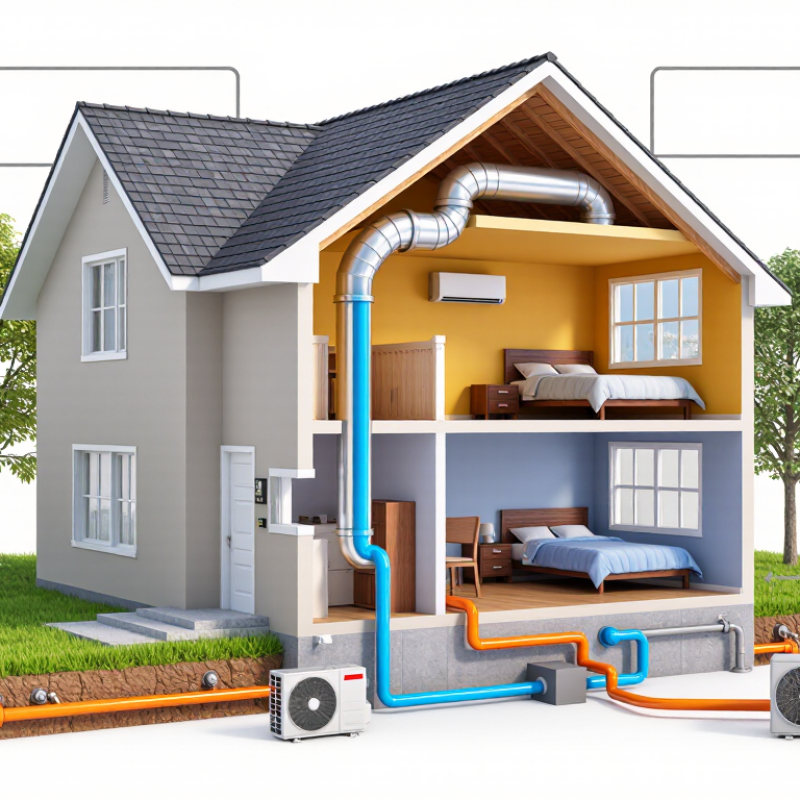
Before comparing home air conditioning systems, note how heat moves through your rooms. Measure each space and record ceiling height, window size, and how much afternoon sun it receives. A west-facing bedroom with thin curtains may feel very different from a shaded hallway. Track it for a few hot afternoons. Also consider how many people usually occupy the home and whether cooking or electronics add heat. These details help explain why one room stays uncomfortable, even when the thermostat says the house is cool.
Next, inspect what is already installed. Check whether your home uses ducts, wall-mounted units, or another setup, then look for blocked vents, dusty filters, and rooms with weak airflow. Notice drafts around windows and doors. Small gaps matter. If ducts are accessible, a qualified heating and cooling professional can check for leaks and insulation problems. Don’t assume that matching a system to the home’s square footage is enough; insulation, climate, window exposure, and layout also affect capacity. A rough estimate can be useful, but it is easy to overlook a sun-baked room or an unfinished attic. Ask for a room-by-room cooling assessment before choosing equipment. Be ready to revise your assumptions.
Home air conditioning systems differ in coverage, installation, and control. The U.S. Energy Information Administration’s 2020 Residential Energy Consumption Survey found that 88% of U.S. households used air conditioning. About 67% had central systems, while 21% relied on room units. That split matters: a common system is not automatically right for every floor plan. Central air cools connected rooms through ducts, offering broad coverage when ducts are sealed and properly sized. But uneven airflow can leave a sunny upstairs bedroom warmer than the hallway.
Ductless mini-splits cool selected rooms, with separate indoor units allowing different temperature settings. They suit additions or homes without existing ducts, though the indoor units remain visible on walls. The U.S. Department of Energy’s Energy Saver guidance notes that typical duct systems can lose 20% to 30% of their air through leaks and poor connections. Ductless systems avoid that specific loss, but installation and room layout still affect performance. Room air conditioners are a simpler option for one occupied space; portable units can be moved, but often occupy floor space and need a window exhaust. Small details count. Compare the rooms you actually use, the location of windows, and whether a landlord permits permanent installation. The trade-off is not perfectly tidy: low upfront cost may mean less even cooling, while whole-home coverage can cool empty rooms.
Choosing capacity starts with your home’s actual cooling load, not floor area alone. ACCA’s Manual J method considers local design temperatures, insulation, windows, air leakage, occupants, and duct losses. A west-facing upstairs room may need more cooling than a shaded room of equal size. Ask for room-by-room calculations, not just a rule-of-thumb estimate. Too large? It may cool quickly and switch off before removing enough humidity. Too small? It may run constantly during a heat wave. Neither is ideal.
Efficiency matters because cooling uses a meaningful share of household electricity. The U.S. Energy Information Administration’s 2020 Residential Energy Consumption Survey found that space cooling accounted for about 19% of U.S. household electricity use. Compare SEER2 ratings within the same equipment type, and check local minimum requirements. A higher rating can reduce seasonal energy use, but actual savings depend on climate, settings, and installation quality. Leaky ducts can quietly undermine the rated performance. A detail that is easy to miss: high efficiency cannot compensate for incorrect capacity. I would question the load assumptions if windows, insulation, or shade have changed. Estimates can still be imperfect. That deserves a second look.
| How to Choose the Best Home Air Conditioning Systems? — Match System Capacity and Efficiency to Your Home | |||||
|---|---|---|---|---|---|
| System Type | Common Cooling Capacity | Very Rough Area Guide | Efficiency Measure | Often Suits | Key Considerations |
| Ducted central split system | About 18,000–60,000 BTU/h (1.5–5 tons) | Approximately 700–2,500 sq ft, depending on the home | SEER2; compare the published rating for the complete matched system | Homes with existing, well-sealed ductwork and several rooms to cool | Leaky or poorly insulated ducts can reduce comfort and efficiency. A professional load calculation should determine capacity. |
| Ductless mini-split | Common single-zone sizes range from about 6,000–36,000 BTU/h; multi-zone systems vary | Often used for one room or a defined zone; coverage depends on layout and conditions | SEER2; check the rating for the specific system and configuration | Homes without ducts, additions, or rooms that need independent temperature control | Indoor-unit placement and the number of zones matter. Multi-zone capacity is not simply a room-by-room area calculation. |
| Packaged central air conditioner | Commonly about 24,000–60,000 BTU/h (2–5 tons) | Approximately 900–2,500 sq ft, depending on the home | SEER2; compare products within the same system category | Homes where a single outdoor unit is practical and ducts distribute air throughout the home | Requires suitable ductwork and installation space. Local climate and equipment configuration affect performance. |
| Room air conditioner | Commonly about 5,000–25,000 BTU/h | Roughly 150–1,500 sq ft, depending on capacity and room conditions | CEER is commonly used for room air conditioners; compare like with like | Cooling a single room or a small area without installing a whole-home system | Correct window fit, room exposure, and airflow are important. A unit may not cool adjoining rooms evenly. |
| Portable air conditioner | Capacity varies by model; check the current standardized rating on the product label | Best considered for a specific room, not as a direct whole-home substitute | Use the applicable product-label rating; ratings may not be directly comparable with central-system SEER2 | Temporary or limited cooling where a window unit cannot be installed | Exhaust-hose setup and room sealing affect performance. Follow the manufacturer’s sizing guidance for the rated capacity. |
| Important sizing note: Area figures are broad screening estimates, not sizing recommendations. Actual cooling load depends on climate, insulation, air leakage, windows, ceiling height, shading, occupancy, and internal heat. Ask a qualified contractor to perform a room-by-room load calculation (such as Manual J in the United States) before selecting capacity. Oversized equipment can cycle frequently and may control humidity less effectively. | |||||
Before comparing air-conditioning systems, inspect the home’s layout and existing equipment. A central system may use existing ducts, but damaged or poorly sealed ducts can waste cooled air. Ductless units can suit additions or rooms without ductwork, though indoor and outdoor units need suitable locations. A technician should assess room sizes, insulation, windows, and electrical capacity before recommending equipment. Bigger is not automatically better; an oversized unit may cool quickly but leave rooms damp.
Installation costs include more than the equipment itself. Ask for an itemized estimate covering labor, duct repairs, electrical changes, drainage, and removal of old equipment. Small details matter. Compare the scope of work, not just the lowest price. A low quote may omit work that becomes necessary once a wall or ceiling is opened. Budget for surprises. It is sensible to keep a modest contingency, especially in older homes, where wiring or duct conditions can be hard to confirm beforehand.
Maintenance affects comfort and long-term costs. Check the filter monthly during heavy use, and replace or clean it according to its type and the manufacturer’s instructions. Keep leaves and debris away from the outdoor unit, leaving clear airflow around it. Arrange professional inspection periodically; a technician can check refrigerant performance, electrical connections, and condensate drainage. Maintenance schedules vary with system design and household use. Skipping a season may seem harmless, but a blocked drain can cause water damage. I still find that filter reminders are easy to forget, so linking them to a monthly calendar helps.
Choosing a home air-conditioning system starts with your local climate, not a showroom label. In hot, humid areas, cooling capacity and moisture removal both matter. In dry regions, ventilation and shade may shape comfort. Note which rooms face afternoon sun and whether upstairs bedrooms trap heat. These details help an HVAC professional estimate the load instead of guessing from floor area alone. Bigger is not always better. An oversized unit may cool quickly but cycle often, creating uneven temperatures and humidity problems.
Tips: Compare the full cost, not just the purchase price. Ask for an estimate covering installation, maintenance, and expected energy use. Check that capacity is based on a room-by-room assessment. Keep filters clean, and seal obvious drafts around doors and windows.
Set a budget that includes future bills and repairs. A high-efficiency model may cost more upfront, so compare its rated efficiency with your likely usage and local electricity rates. If you plan to move soon, a smaller investment may make more sense. For a long-term home, quiet operation and accessible service may justify extra cost. Leave room for uncertainty: weather, insulation, and household habits affect real-world performance. If estimates differ sharply, ask what assumptions led to each recommendation.